
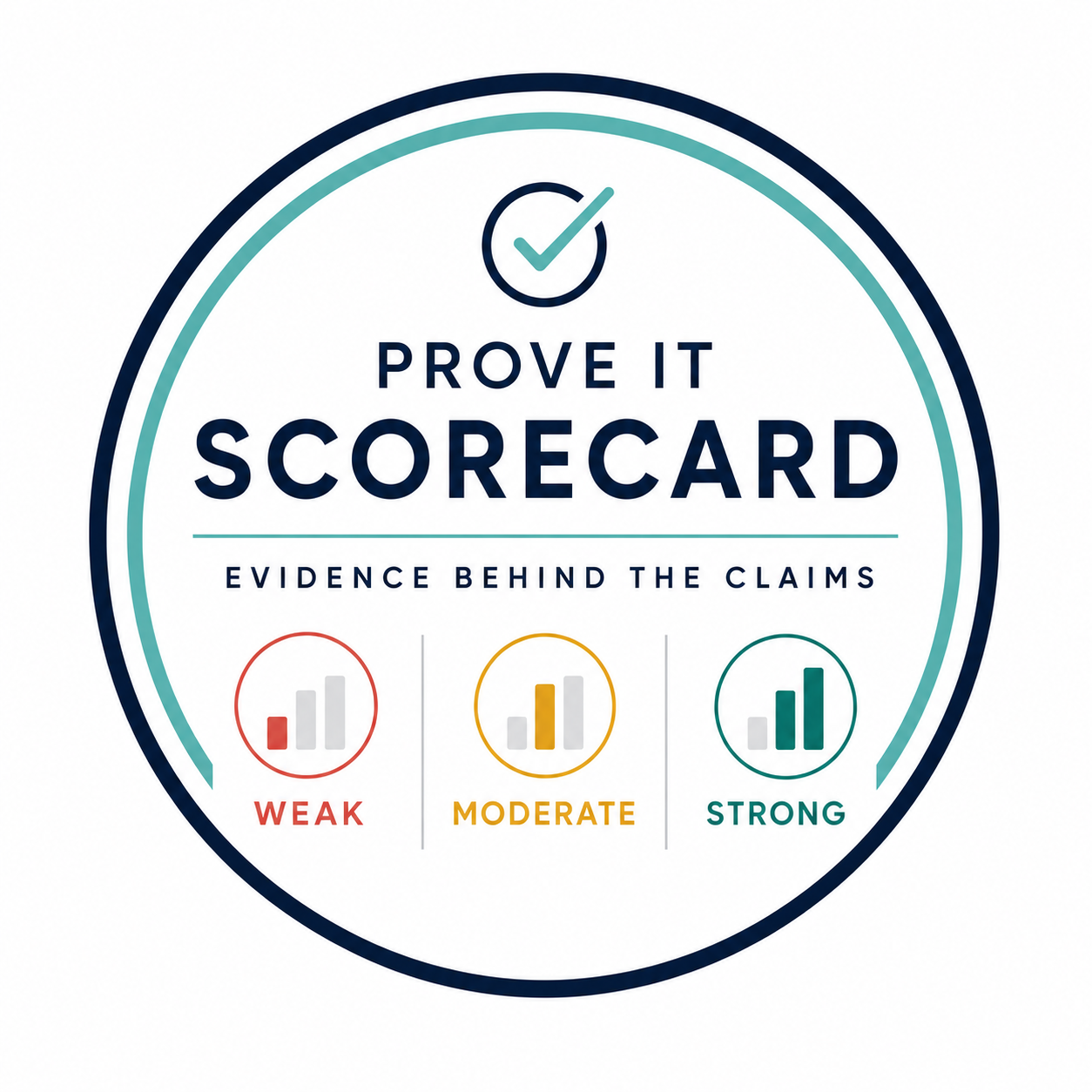
What the scores mean
- 5 out of 5: Strong, high‑quality evidence from many good studies. Recommended in UK guidelines.
- 3 out of 5: Some evidence it helps, but not as strong or consistent.
- 1 out of 5: Little or no reliable evidence that it works for menopause symptoms.
What we look at
Each product is scored on five things:
- Quality of the research Are there proper clinical trials, or just small or low‑quality studies?
- Amount and consistency of evidence Have lots of studies found similar results, or are findings mixed?
- Relevance to women in the UK Were the studies done in peri‑ or postmenopausal women, and do they match the symptoms UK women experience?
- Safety Is it generally safe, and is there good information about side effects?
- Guideline support Do trusted UK bodies like NICE or the British Menopause Society recommend it?
How the final score is calculated
Each of the five areas contributes to the final score. Treatments with strong research and clear guideline support score highest. Products with weak or inconsistent evidence score lower.
Why this matters
Menopause products vary hugely in quality. Some are gold‑standard medical treatments, while others are supplements with very little evidence. This scoring system helps you see the difference at a glance — so you can make informed choices and have clearer conversations with your GP or menopause specialist.