
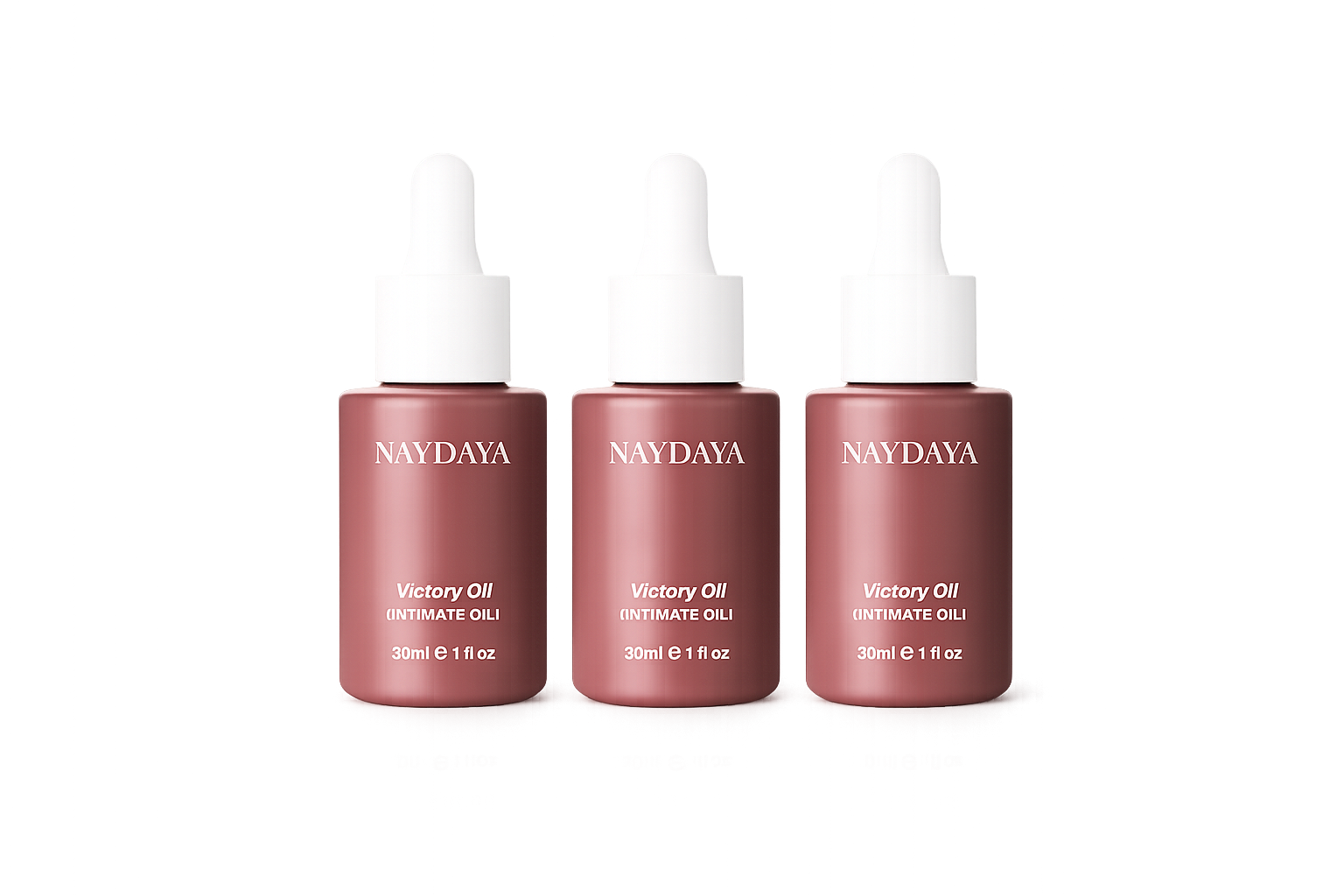
Naydaya Victory Oil
Can they prove what they say?
No. A brand-funded survey isn't proof a product works. And only 1 ingredient (Vitamin E) has quality evidence in vaginal dryness. There are other, cheaper moisturisers with more evidence-based ingredients like hyaluronic acid.
What it is:
Victory Oil is a vulvovaginal moisturising oil for dryness and discomfort, primarily marketed to menopausal and perimenopausal women
What do the guidelines say
Non-hormonal vaginal and vulvovaginal moisturisers are explicitly recommended in NICE NG23 (updated November 2024) as a first-line option for women with genitourinary symptoms who prefer not to use vaginal oestrogen [1].
The BSSM Position Statement on Genitourinary Syndrome of Menopause similarly supports lubricants and moisturisers as part of effective, safe, and cost-effective management of GSM [2].
The BGCS/BMS joint guideline on menopause after gynaecological cancer (2024) reinforces this position for women with urogenital symptoms [3].
No guideline names Victory Oil or endorses any specific natural oil-based vulvovaginal product by name.
What does the evidence say
No published RCTs, systematic reviews, or meta-analyses were found on Victory Oil itself. The brand's performance figures (95% hydration, 95% reduced stinging) come from a self-funded user trial of 108 women over four weeks. This is not peer-reviewed, had no control group, and does not meet the threshold for clinical evidence.
At the category level, a 2018 systematic review and meta-analysis of 29 RCTs found that vaginal lubricants and moisturisers improve dryness and dyspareunia in menopausal women, though they are less effective than vaginal oestrogen on broader sexual function outcome measures [4]. This supports the use of the product category, not this specific formulation.
At the ingredient level, no RCTs were found for pomegranate seed oil, grapeseed oil, sweet almond oil, castor oil, or mango seed butter applied to vulvovaginal or menopausal symptoms.
Coconut oil has been tested in a small double-blind RCT (n=34) as a skin moisturiser for dry skin on the legs, where it performed comparably to mineral oil in improving hydration and skin lipids [5]. This study did not involve the vulva or menopausal tissue.
Vitamin E in vaginal suppository form was tested in a small RCT (n=52) against conjugated oestrogen vaginal cream and showed meaningful improvement in vaginal maturation, though the oestrogen cream performed better at four weeks [6]. This study used vitamin E as an active ingredient internally, which is a different context from a topical vulval oil applied externally.
The brand's claim that its ingredients are "clinically backed" deserves scrutiny. The available evidence covers individual ingredients in different conditions, populations, and delivery systems, not Victory Oil's specific formulation applied to the vulva.
The claim that pomegranate seed oil "boosts collagen production" in the vulva or vagina has no published trial evidence to support it in this context.
References
[1] NICE. Menopause: identification and management. NICE Guideline NG23. Updated November 2024. Available at: https://www.nice.org.uk/guidance/ng23.
[2] BSSM. Position Statement for Management of Genitourinary Syndrome of the Menopause (GSM). 2024. Available at: https://bssm.org.uk/wp-content/uploads/2024/03/BSSM-Position-statement-for-management-of-genitourinary-syndrome-of-the-menopause-GSM.pdf.
[3] BGCS/BMS. Guidelines on Management of Menopausal Symptoms after Gynaecological Cancer. 2024. Available at: https://www.bgcs.org.uk/wp-content/uploads/2024/09/BGCS-BMS-Guidelines-on-Management-of-Menopausal-Symptoms-after-Gynaecological-Cancer-09.09.24.pdf.
[4] Pitsouni E, Grigoriadis T et al. Efficacy of vaginal therapies alternative to vaginal estrogens on sexual function and orgasm of menopausal women: A systematic review and meta-analysis of randomized controlled trials. Eur J Obstet Gynecol Reprod Biol 2018;229:45-56. PMID: 30103082. https://doi.org/10.1016/j.ejogrb.2018.08.008
[5] Agero ALC, Verallo-Rowell VM. A randomized double-blind controlled trial comparing extra virgin coconut oil with mineral oil as a moisturizer for mild to moderate xerosis. Dermatitis 2004;15(3):109-16. PMID: 15724344. https://doi.org/10.2310/6620.2004.04006
[6] Parnan Emamverdikhan A, Golmakani N et al. A survey of the therapeutic effects of Vitamin E suppositories on vaginal atrophy in postmenopausal women. Iran J Nurs Midwifery Res 2016;21(5):475-481. PMID: 27904630. https://doi.org/10.4103/1735-9066.193393
Castor Oil (Ricinus Communis)
Grapeseed Oil (Vitis Vinifera)
Mango Seed Butter
Pomegranate Seed Oil
Sweet Almond Oil (Prunus Amydalus Dulcis
Vitamin E
Virgin Coconut Oil (Cocos Nucifera)

Related Articles
You might be intrested in reading...