
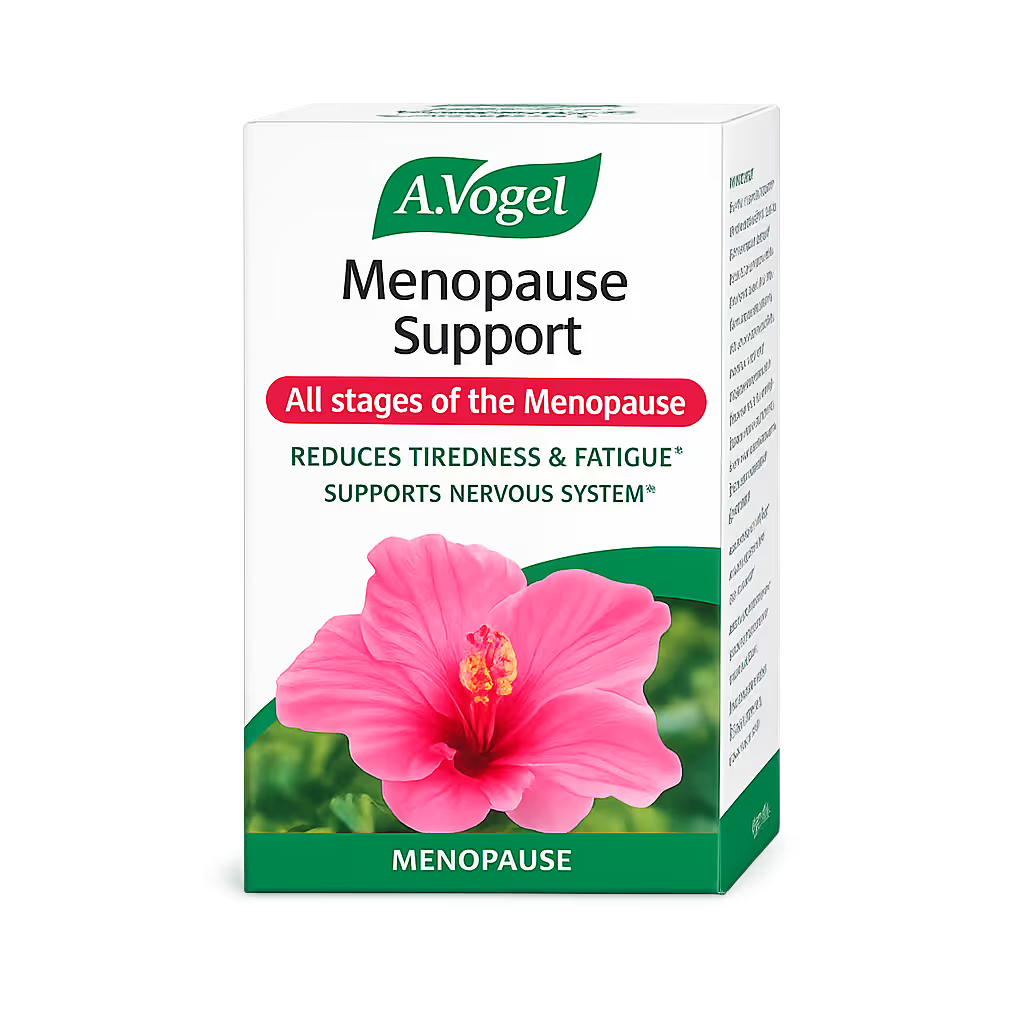
A.Vogel Menopause Support
Can they prove what they say?
Yes, mostly. It lacks some basics like Vitamin D, B6 and B12, which some other supplements include. But the soy isoflavone dose matches those used in clinical trials showing modest reductions in hot flushes, so that's one hurdle overcome.
What's in it
A.Vogel Menopause Support is a herbal dietary supplement containing three main ingredients: soy isoflavones extracted from fermented soya beans, magnesium, and hibiscus extract. The product provides 50mg of soy isoflavones and around 56mg of magnesium per daily dose (two tablets), taken once in the morning and once in the evening with food.
What A.Vogel Menopause Support claims
A.Vogel markets Menopause Support as a product that can be used to help women through all stages of the menopause, including perimenopause, menopause, and postmenopause. The brand makes several specific ingredient claims:
Provides 50mg of bioavailable phytoestrogenic soy isoflavones per day, obtained using an extract of soya beans
Magnesium contributes to the reduction of tiredness and fatigue, and helps support the nervous system
The brand also emphasises that the product is made from fermented soya beans, which it describes as offering better absorption, and notes that most women find it takes up to two months to feel the full benefits. On some retail sites, the product is described as being "specially formulated to alleviate common menopause symptoms including night sweats and hot flushes," though the brand itself positions this more cautiously, with FAQs suggesting that if hot flushes and sweating are the main concern, women may prefer their licensed herbal medicine Menoforce Sage Tablets instead.
What the evidence actually shows
Soy isoflavones
The headline ingredient in this product is the one with the strongest evidence base, though the picture is more nuanced than it may first appear. A.Vogel correctly states that the product provides 50mg of soy isoflavones, and this dose does sit within the range used in positive trials. A meta-analysis of 19 randomised controlled trials found soy isoflavones reduced hot flush frequency by around 21% and severity by 26% compared to placebo [1]. However, a 2024 meta-analysis found no significant effect on hot flushes in perimenopausal women specifically, suggesting the evidence may be stronger once periods have stopped [2]. This is an important limitation for a product marketed for "all stages" of menopause.
One modelling analysis found soy isoflavones are slow acting, with effects potentially taking six to 12 months to peak, so short trials may underestimate the benefit [3]. The brand's FAQ acknowledging that it may take up to two months to feel the full benefits aligns with the evidence on slow onset, though even this may be conservative.
A.Vogel uses fermented soy isoflavones, which are thought to be better absorbed than non fermented forms, though whether this makes a meaningful clinical difference has not been established in randomised controlled trials. The claim is plausible but not proven to translate into superior symptom relief.
Magnesium
The magnesium claims made by A.Vogel are accurate and compliant with EU authorised health claims. Magnesium does contribute to normal psychological function and reduced tiredness and fatigue, both of which are recognised health claims. The brand correctly identifies these benefits on packaging and in marketing materials. A large observational study found high rates of magnesium deficiency specifically in women with climacteric syndrome, making it a plausible nutritional gap in this population [4]. A review of magnesium in gynaecological conditions found evidence linking deficiency to postmenopausal symptoms and suggested supplementation may be beneficial [5].
However, the evidence does not extend to a direct effect on hot flushes or night sweats. A phase III randomised controlled trial testing magnesium oxide specifically for menopausal hot flushes found no significant benefit over placebo [6]. The case for magnesium here rests more on correcting deficiency and supporting general wellbeing, rather than on direct symptom relief.
Hibiscus
Hibiscus is the least well evidenced ingredient in the formulation. Some animal studies suggest possible phytoestrogenic activity [7], but no high quality randomised controlled trials have shown a direct effect on hot flushes or night sweats. Its role here is likely nutritional and antioxidant rather than symptom specific. A.Vogel does not make explicit claims about hibiscus beyond listing it as part of the formulation, which is appropriate given the limited evidence.
References
[1] Taku K et al. Menopause. 2012;19(7):776–90. https://pubmed.ncbi.nlm.nih.gov/22433977/
[2] Fontvieille A et al. Frontiers in Endocrinology. 2024. https://pmc.ncbi.nlm.nih.gov/articles/PMC12296567/
[3] Xu X et al. Eur J Clin Pharmacol. 2014;70(12):1499–505. https://pubmed.ncbi.nlm.nih.gov/25316502/
[4] Starostin K et al. Magnesium Research. 2021;34(1):1–12. https://pubmed.ncbi.nlm.nih.gov/33482760/
[5] Parazzini F et al. Magnesium Research. 2017;30(1):1–7. https://pubmed.ncbi.nlm.nih.gov/28392498/
[6] Barton DL et al. Menopause. 2011;18(3):294–9. https://pmc.ncbi.nlm.nih.gov/articles/PMC4442087/
[7] Lorenzana-Martínez M et al. J Ethnopharmacol. 2023;314:116644. https://pubmed.ncbi.nlm.nih.gov/37314593/
Magnesium
Phytoestrogens
Hibiscus extract

Related Articles
You might be intrested in reading...