For many women, starting hormone replacement therapy is transformative. The hot flushes ease, sleep improves, mood lifts. And then the progesterone starts, and something shifts. Anxiety creeps in. Mood drops. Bloating, headaches, breast tenderness, brain fog. The oestrogen side feels like relief; the progesterone side feels like PMS. Some women stop HRT altogether because of it.
This experience has a name: progesterone intolerance. It is underrecognised, undertreated, and far too often used as a reason to discontinue HRT entirely rather than to adjust it.
Why progesterone is non-negotiable for most women
Any woman with an intact uterus who takes systemic oestrogen must also take a progestogen. Oestrogen alone causes the endometrial lining to thicken, increasing the risk of endometrial hyperplasia and cancer over time. [1] Progesterone or a synthetic progestogen counteracts this by producing secretory transformation of the endometrium. [2] The only women who can safely take oestrogen alone are those who have had a hysterectomy.
This is why progesterone intolerance is such a clinically important problem. It sits at the intersection of two legitimate needs: symptom relief from oestrogen and uterine safety from progesterone. When a woman cannot tolerate her progestogen, she faces a difficult choice that her prescriber needs to help her navigate, not dismiss.
How common is it and what does it feel like?
Progestogen intolerance is estimated to affect around 10 to 20% of women taking combined HRT. [3] Symptoms span three domains:
- Psychological: anxiety, low mood, irritability, panic attacks, poor concentration, feeling emotionally overwhelmed
- Physical: bloating, breast tenderness, headaches, fatigue, fluid retention, acne, greasy skin
- Metabolic (less common): adverse changes in cholesterol, blood sugar, or blood pressure, particularly with certain synthetic progestogens [2]
The hallmark is a woman who feels well on her oestrogen and wretched every time the progesterone phase begins. Progestogen intolerance is described in the clinical literature as "a key factor limiting compliance with hormone therapy," with some women feeling that progesterone makes them feel like an entirely different person. [2]
The neuroscience behind the sensitivity
The biological explanation lies in how progesterone is metabolised in the brain. Progesterone is converted into a neurosteroid called allopregnanolone, which acts as a positive modulator of the GABA-A receptor, the brain's major inhibitory system. In most women, this produces calm and mildly anxiolytic effects. In a subset, the response is paradoxical. [4]
Research into premenstrual dysphoric disorder has been illuminating here. Studies show that mood symptoms are related to allopregnanolone concentrations in an inverted U-shaped pattern: disruption is worst at the moderate concentrations typical of the luteal phase and of standard HRT doses, while both very low and very high concentrations are better tolerated. [5] In susceptible women, moderate allopregnanolone levels increase amygdala activity in a pattern consistent with anxiety, while higher concentrations produce the calming effects seen with benzodiazepines. [5]
Women with progesterone intolerance appear to share a biological vulnerability: a dysregulated GABA-A receptor response to progesterone metabolites. [4] Continuous exposure to progesterone has also been shown to upregulate a GABA-A receptor subunit associated with increased anxiety. [6] This is not a psychological weakness. It is a measurable neurobiological difference.
"Women with progesterone intolerance are not imagining it. They are experiencing a real neurobiological response to a medication. The clinical challenge is finding them a regimen that works, not dismissing them."
Synthetic progestogens versus micronised progesterone
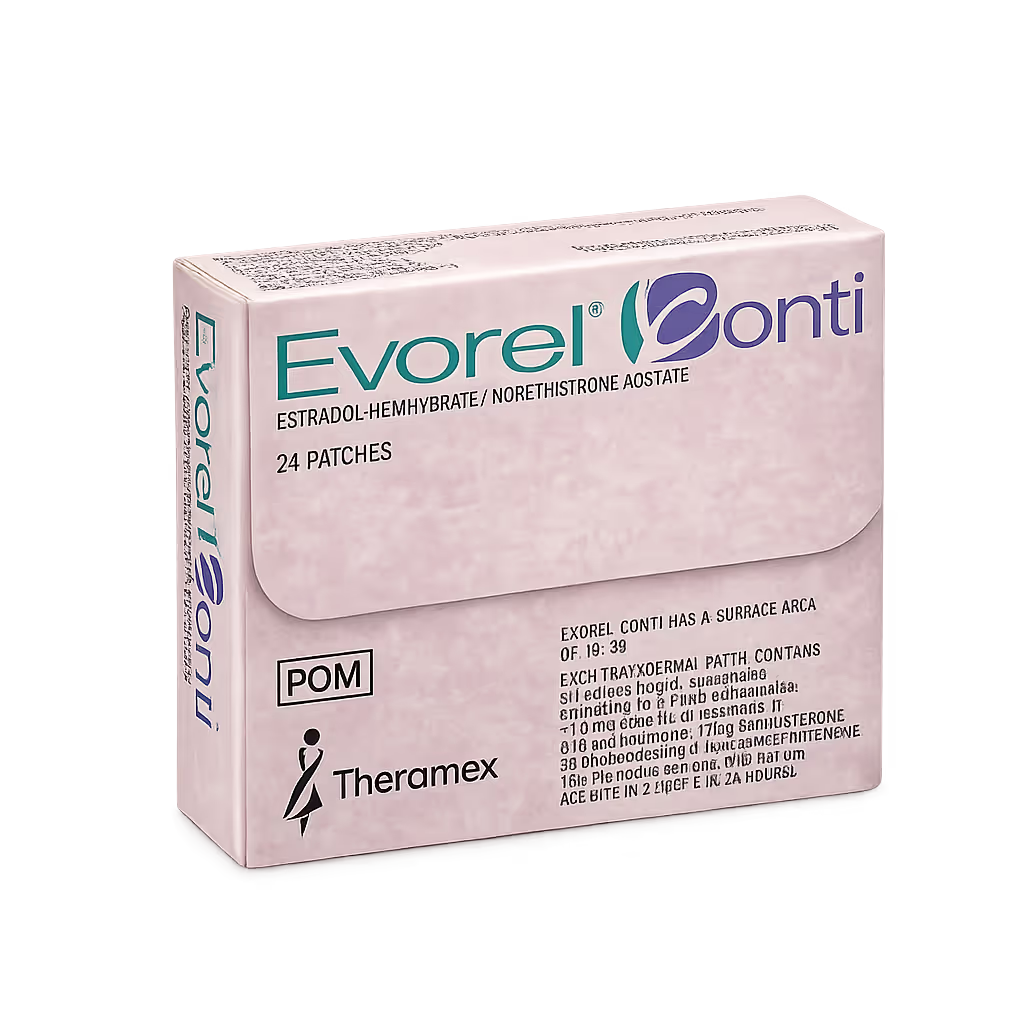
Not all progestogens are equal, and this matters for both tolerability and safety. Synthetic progestogens, such as norethisterone acetate, medroxyprogesterone acetate, and levonorgestrel, are structurally modified molecules with variable effects on androgen, glucocorticoid, and mineralocorticoid receptors, which accounts for their wider side effect profile. Nor-testosterone-derived progestogens in particular can have adverse effects on skin, lipids, vascular function, and insulin resistance. [2]
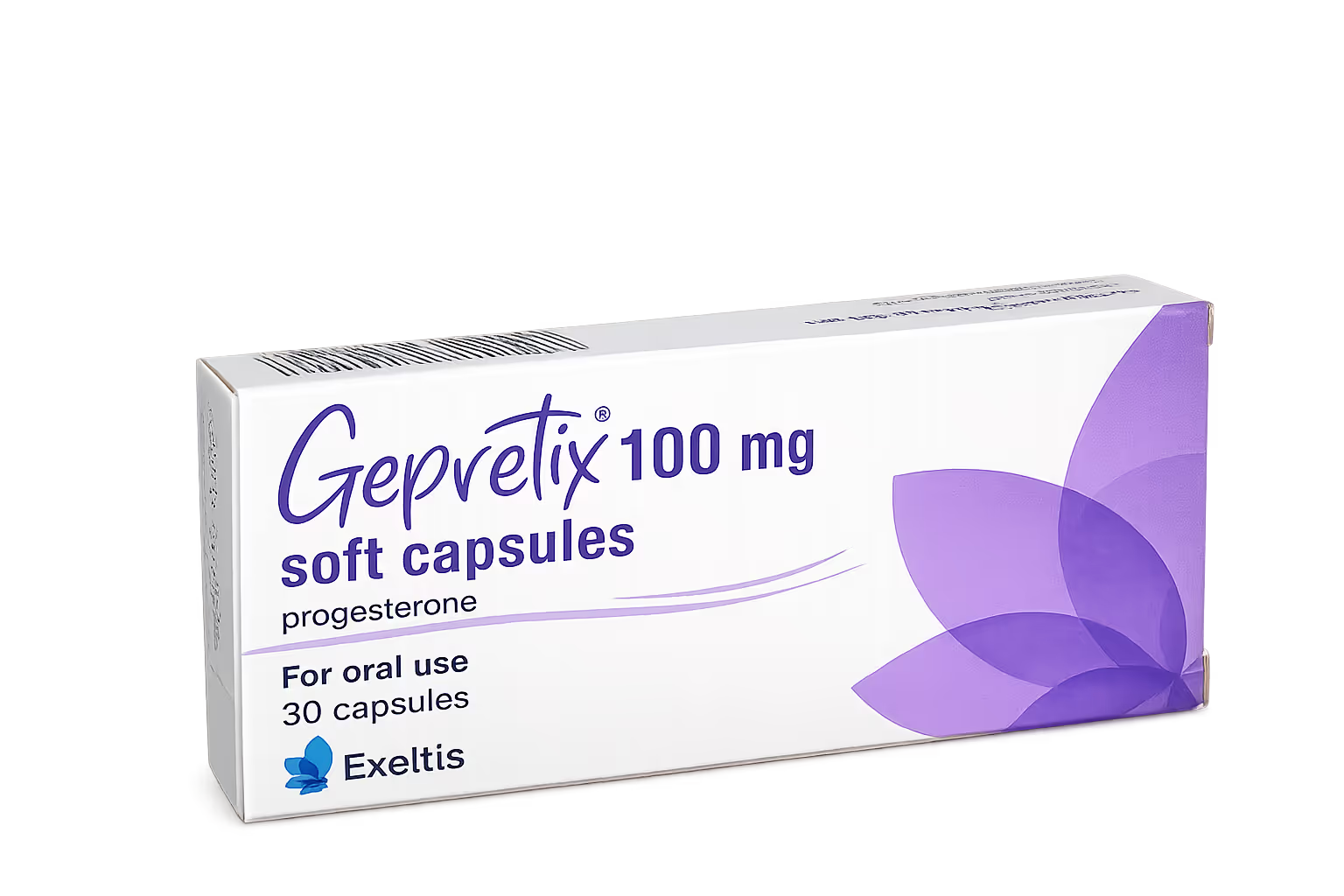
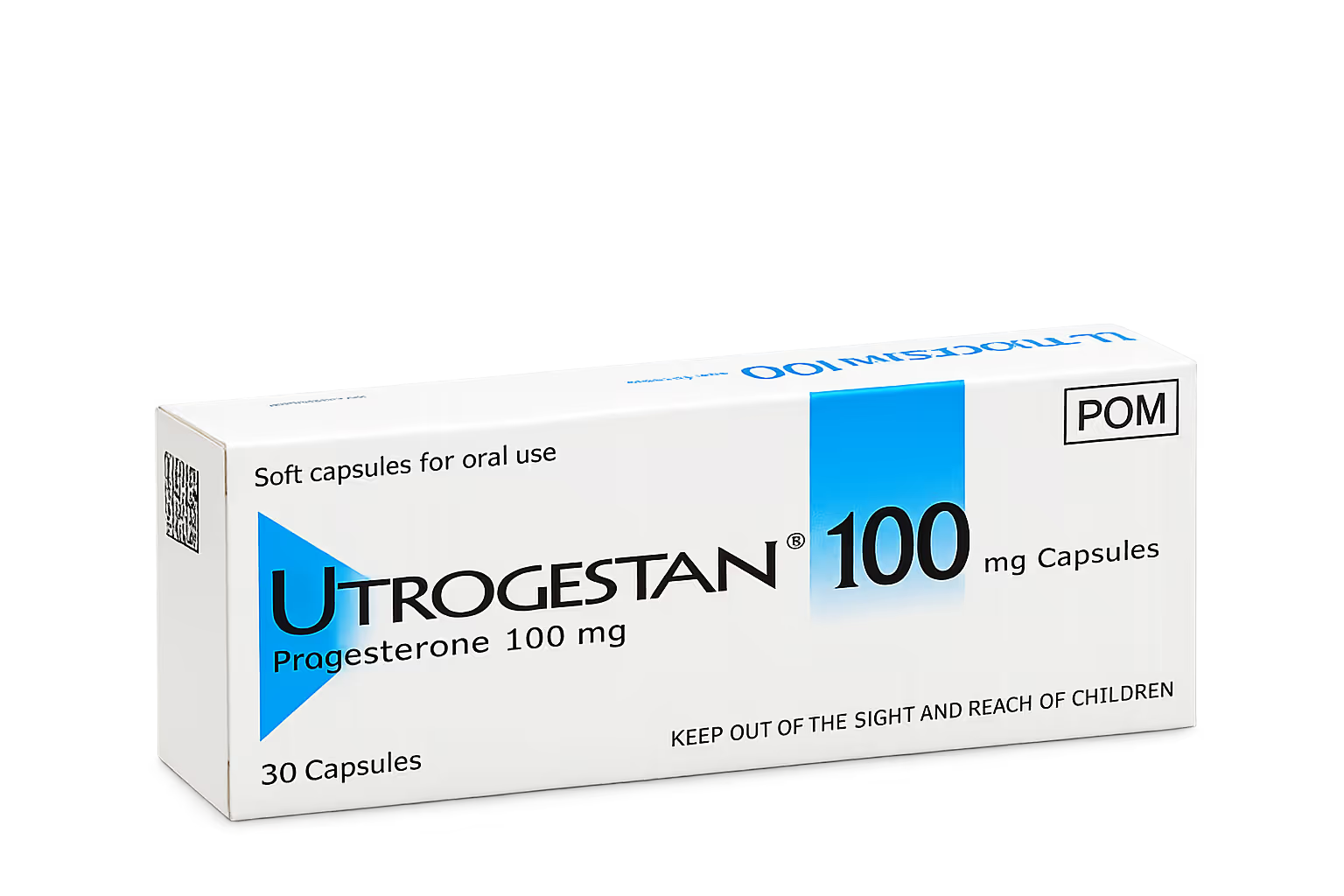
Micronised progesterone (sold in the UK as Utrogestan) is chemically identical to endogenous progesterone. It binds selectively to the progesterone receptor with a more neutral effect on other hormonal pathways, and is generally better tolerated for mood-related symptoms. [7]
The safety differences are also meaningful. The large E3N cohort study, following over 54,000 postmenopausal women, found that HRT containing synthetic progestins was associated with a significantly elevated breast cancer risk, while HRT containing micronised progesterone was not, with relative risks of 1.4 versus 0.9 respectively. [8] A 2016 systematic review and meta-analysis confirmed that micronised progesterone was associated with lower breast cancer risk than synthetic progestins when each was combined with oestrogen, with a relative risk of 0.67. [9] For venous thromboembolism, large observational studies similarly found increased risk with norpregnane derivatives but not with progesterone. [7]
The perimenopause complication
Perimenopause adds further complexity. During the menopausal transition, oestradiol levels do not fall steadily. Research shows they average 26% higher than in earlier reproductive years, while progesterone levels become insufficient or absent due to increasingly anovulatory cycles. [10] Some perimenopausal women already feel the effects of this imbalance before any HRT is introduced, with breast tenderness, heavy periods, and mood instability.
Introducing exogenous progesterone into this already-fluctuating hormonal environment can be particularly poorly tolerated. A woman whose brain has been sensitised to progesterone fluctuations across decades of cycles may react more strongly to HRT progesterone than a postmenopausal woman whose hormones have stabilised at a lower baseline.
What can be done
Progesterone intolerance is not a reason to abandon HRT. It is a reason to individualise it:
- Switch to micronised progesterone if not already using it. Taking it at bedtime uses its sedative properties to blunt the worst neurological effects. [7]
- Adjust the dose or frequency. Sequential dosing (progesterone for 12 to 14 days per month) provides a monthly break that many women find more manageable than continuous dosing.
- Use the levonorgestrel intrauterine system (Mirena IUS). The Mirena delivers progestogen locally to the uterus with minimal systemic absorption, providing effective endometrial protection with a far lower systemic burden. [2] For women whose symptoms are primarily mood-related, this is often the most effective solution.
- Try vaginal administration. Vaginal progesterone pessaries deliver progestogen locally and reduce systemic exposure, improving tolerability for some women.
- Consider the oestrogen-SERM combination. Conjugated oestrogen combined with the SERM bazedoxifene provides endometrial protection without progesterone for postmenopausal women who cannot tolerate any progestogen. [1]
- Hysterectomy remains a last resort for severe, refractory cases, but it is a legitimate option. Removing the uterus eliminates the need for any progestogen, allowing oestrogen-only therapy. [2]
The research gap
The most striking aspect of progesterone intolerance as a clinical entity is how little formal research exists on it. Prevalence estimates of 10 to 20% rest on clinical observation rather than systematic study. [3] The mechanistic understanding is drawn largely from PMDD research rather than HRT-specific trials. The PROBES trial comparing micronised progesterone with norethisterone acetate is an important step, but tolerability is not even its primary outcome. [11]
Progestogen intolerance is one of the leading reasons women stop HRT, forfeiting long-term benefits for bone, cardiovascular health, and quality of life. That a problem this common and this consequential remains so poorly studied in 2026 is yet another example of a women's health concern that has not received the investment it deserves. Women who feel worse on their HRT are not imagining it, are not being difficult, and should not be told to push through. They deserve a prescriber who understands the biology and takes their experience seriously.
"If a significant minority of women on a widely prescribed medication experience intolerable side effects from one component of it, that should be a research priority. That progestogen intolerance remains understudied in 2026 is an indictment of how women's health complaints have historically been treated."
References
[1] Hormone Replacement Therapy. StatPearls. NCBI Bookshelf. Updated 2024. https://www.ncbi.nlm.nih.gov/books/NBK493191/
[2] Panay N, Studd J. Progestogen intolerance and compliance with hormone replacement therapy in menopausal women. Hum Reprod Update. 1997;3(2):159–171. https://pubmed.ncbi.nlm.nih.gov/9286739/
[3] Newson L. Progesterone intolerance. Balance Menopause. 2023. https://www.balance-menopause.com/menopause-library/progesterone-intolerance/
[4] Hantsoo L, Epperson CN. Allopregnanolone in premenstrual dysphoric disorder: evidence for dysregulated sensitivity to GABA-A receptor modulating neuroactive steroids. Neurosci Biobehav Rev. 2020;115:168–185. https://pmc.ncbi.nlm.nih.gov/articles/PMC7231988/
[5] Andreen L et al. Allopregnanolone and mood disorders. Psychoneuroendocrinology. 2013;38(8):1–9. https://pubmed.ncbi.nlm.nih.gov/23978486/
[6] Gulinello M, Smith SS. Anxiogenic effects of neurosteroid exposure: sex differences and altered GABAA receptor pharmacology in adult rats. J Pharmacol Exp Ther. 2003;305(2):541–548. https://pubmed.ncbi.nlm.nih.gov/12606703/
[7] Mirkin S. Evidence on the use of progesterone in menopausal hormone therapy. Climacteric. 2018;21(4):346–354. https://www.tandfonline.com/doi/full/10.1080/13697137.2018.1455657
[8] Fournier A et al. Breast cancer risk in relation to different types of hormone replacement therapy in the E3N-EPIC cohort. Int J Cancer. 2005;114(3):448–454. https://pubmed.ncbi.nlm.nih.gov/15551359/
[9] Asi N et al. Progesterone vs. synthetic progestins and the risk of breast cancer: a systematic review and meta-analysis. Syst Rev. 2016;5(1):121. https://pmc.ncbi.nlm.nih.gov/articles/PMC4960754/
[10] Prior JC. Progesterone for symptomatic perimenopause treatment. Facts Views Vis Obgyn. 2011;3(2):109–120. https://pmc.ncbi.nlm.nih.gov/articles/PMC3987489/
[11] Koivu A et al. Breast and endometrial safety of micronised progesterone versus norethisterone acetate (PROBES): study protocol. BMJ Open. 2024. https://pmc.ncbi.nlm.nih.gov/articles/PMC11499784/