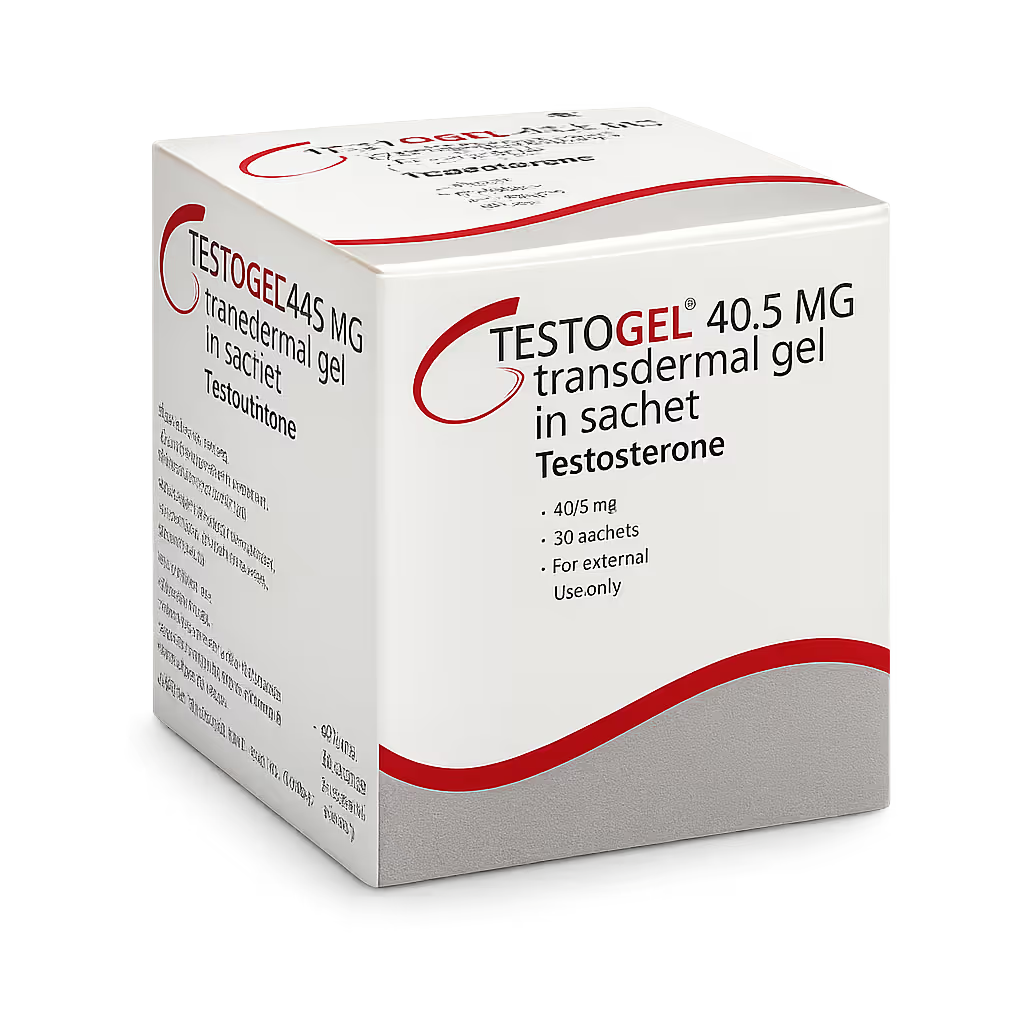

Testosterone is not a male hormone. It is a human hormone, and in women it plays a wide-ranging biological role that medicine has only recently begun to take seriously. Understanding what testosterone does, how it changes through perimenopause and menopause, and why those changes matter is long overdue.
Women produce more testosterone than oestrogen
Before the menopause, women produce three times as much testosterone as oestrogen. [1] Most circulates bound to proteins, with only the small unbound "free" fraction biologically active in tissues. The sources of testosterone in women are the ovaries, adrenal glands, and peripheral tissues including the skin. [2] Fat, muscle, and brain tissue can also convert precursor hormones into active testosterone locally, meaning blood tests do not tell the whole story.
What testosterone actually does
The list is considerably longer than most women are told:
- Bone: Testosterone is positively correlated with cortical bone mineral density in females and is an independent predictor of bone density in healthy young women. A 2023 study found a significant association between lower testosterone and increased osteoporosis risk at the hip. [3, 4]
- Muscle: Both oestrogen and testosterone contribute to the wellbeing of skeletal muscle and bone, and loss of sex hormones is associated with age-related decline in muscle mass. [5]
- Brain: Testosterone may help protect the brain against accelerated cognitive decline through neuroprotective effects against oxidative stress. [6] It also influences serotonin and dopamine pathways governing mood.
- Sexual function: The Lancet meta-analysis of 36 trials in over 8,000 women confirmed that transdermal testosterone significantly improved satisfying sexual encounters, desire, arousal, and orgasm. [7]
- Energy, mood, and cognition: The most commonly described symptoms of androgen insufficiency include dysphoric mood, unexplained fatigue, changes in cognition, vasomotor symptoms, bone loss, and decreased muscle strength. [1]
"Testosterone is a hormone with wide-ranging biological activity across the female body. The idea that its only role is in the bedroom is both scientifically implausible and a product of systemic inattention to women's health."
How testosterone changes — and the nuances being missed
The simple story, that menopause causes testosterone to crash, is wrong. There is a steady decline in testosterone production beginning in a woman's late 20s, meaning that by the time she goes through menopause, she will have been experiencing this decline for 20 years or more. [8] This is a lifelong story, not a menopause event.
What actually happens at the transition is more complex. When oestrogen falls sharply, testosterone levels do not change significantly early in menopause, creating a relative increase in the ratio of testosterone to oestrogen that can paradoxically produce transient symptoms of androgen excess. [9] A major 2025 Australian study using highly accurate hormone measurement found no meaningful change in testosterone specifically related to the menopause transition, concluding that age is the major driver of decline, and recommending that future research be age-specific rather than treating all postmenopausal women as a single group. [10]
Surgical menopause: a different situation entirely
Natural and surgical menopause are not equivalent, and lumping them together has caused real clinical harm. Women who undergo surgical menopause have testosterone levels up to 50% lower than women who go through menopause naturally — an immediate loss rather than a gradual one. [11] Women who have their ovaries removed before natural menopause lose decades of testosterone production in a single operation, with consequences for bone, muscle, cognition, and cardiovascular health that are poorly understood and routinely under-treated.
The evidence gap: honest about what we do not know
A 2024 pilot study of 78 women found improvements in mood in 47% of participants and in cognitive symptoms in 39% after four months of testosterone. [12] But the research base for these benefits remains thin.
"The conclusion that testosterone does not help with cognition or mood rests on a handful of small, inconsistent trials. This is not a scientific verdict. It is a reflection of how little research has been invested in women's health."
The meta-analyses concluding that testosterone does not improve cognition or mood are based on only three RCTs covering cognitive symptoms in 213 women total, and four RCTs covering depressive symptoms in 636 women. [12] These are not the numbers of a field that has taken the question seriously. Women are being told these benefits are unproven — not because the evidence is negative, but because the trials have not been done.
A licensed product, decades too late
Testosterone has been used in women for over 80 years, yet historically its association with masculinity has contributed to a lack of recognition of its effects in women. [13] The UK had no testosterone product licensed for women until Androfeme received MHRA approval in August 2025, while over 30 FDA-approved testosterone therapies exist for men in the United States. Clinicians in the UK have been making do with male-licensed products used off-label at fractional doses. [14]
The NIHR-funded ESTEEM trial, with results expected around 2028, will finally assess testosterone's effect on broader menopause quality of life. [15] It is welcome. It is also long overdue.
"We should not still be waiting in 2026 for a definitive trial on a treatment women have been using for decades. That we are says everything about how women's health has been prioritised."
References
[1] Panay N, Fenton A. Should we be prescribing testosterone to perimenopausal and menopausal women? Br J Gen Pract. 2020;70(693):156–157. https://pmc.ncbi.nlm.nih.gov/articles/PMC7098532/
[2] Sievert LL et al. Changes in androgens levels in menopausal women. Prz Menopauzalny. 2021;20(1):1–7. https://pmc.ncbi.nlm.nih.gov/articles/PMC7812536/
[3] Xu Y et al. Association between testosterone levels and bone mineral density in females aged 40–60 years from NHANES 2011–2016. Sci Rep. 2022;12:16335. https://pubmed.ncbi.nlm.nih.gov/36180560/
[4] Karastergiou K et al. Steroid hormone levels and bone mineral density in women over 65 years of age. Sci Rep. 2023;13:4958. https://www.nature.com/articles/s41598-023-32100-x
[5] Enns DL, Tiidus PM. Skeletal muscle and bone: effect of sex steroids and aging. Adv Physiol Educ. 2008;32(2):161–169. https://pubmed.ncbi.nlm.nih.gov/18539850/
[6] Chen X et al. Low serum testosterone concentrations are associated with poor cognitive performance in older men but not women. Front Aging Neurosci. 2021;13:712237. https://pubmed.ncbi.nlm.nih.gov/34790110/
[7] Islam RM et al. Safety and efficacy of testosterone for women: a systematic review and meta-analysis of randomised controlled trial data. Lancet Diabetes Endocrinol. 2019;7(10):754–766. https://pubmed.ncbi.nlm.nih.gov/31353194/
[8] Davis SR. Use of testosterone in postmenopausal women. Clin Obstet Gynecol. 2021;64(4):743–754. https://pubmed.ncbi.nlm.nih.gov/33518180/
[9] Menopause. StatPearls. NCBI Bookshelf. Updated 2023. https://www.ncbi.nlm.nih.gov/books/NBK507826/
[10] Davis SR et al. Testosterone and pre-androgens by age and menopausal stage at midlife. eBioMedicine. 2025. https://www.sciencedirect.com/science/article/pii/S2352396425004165
[11] Parish SJ et al. The clinical management of testosterone replacement therapy in postmenopausal women with hypoactive sexual desire disorder. Int J Impot Res. 2022;34(7):635–641. https://pmc.ncbi.nlm.nih.gov/articles/PMC9674516/
[12] Glynne S et al. Effect of transdermal testosterone therapy on mood and cognitive symptoms in peri- and postmenopausal women: a pilot study. Arch Womens Ment Health. 2025;28(3):541–550. https://pubmed.ncbi.nlm.nih.gov/39283522/
[13] Traish AM. A personal prospective on testosterone therapy in women: what we know in 2022. J Clin Med. 2022;11(15):4291. https://pmc.ncbi.nlm.nih.gov/articles/PMC9331845/
[14] British Menopause Society. Tool for Clinicians: Testosterone replacement in menopause. January 2026. https://thebms.org.uk/wp-content/uploads/2026/02/08-NEW-BMS-TfC-Testosterone-replacement-in-menopause-JAN2026-C.pdf
[15] NIHR. ESTEEM trial: testosterone for menopause symptoms. https://www.nihr.ac.uk/news/nihr-funds-trial-of-testosterone-for-menopause-symptoms/