
Testogel
Can they prove what they say?
Yes. The quality evidence for transdermal testosterone in peri/menopausal women focuses almost exclusively on improving libido (eye roll). So, there is no robust evidence it improves energy, mood, brain fog, or other menopausal symptoms beyond libido, but that is hopefully changing soon.

What it is:
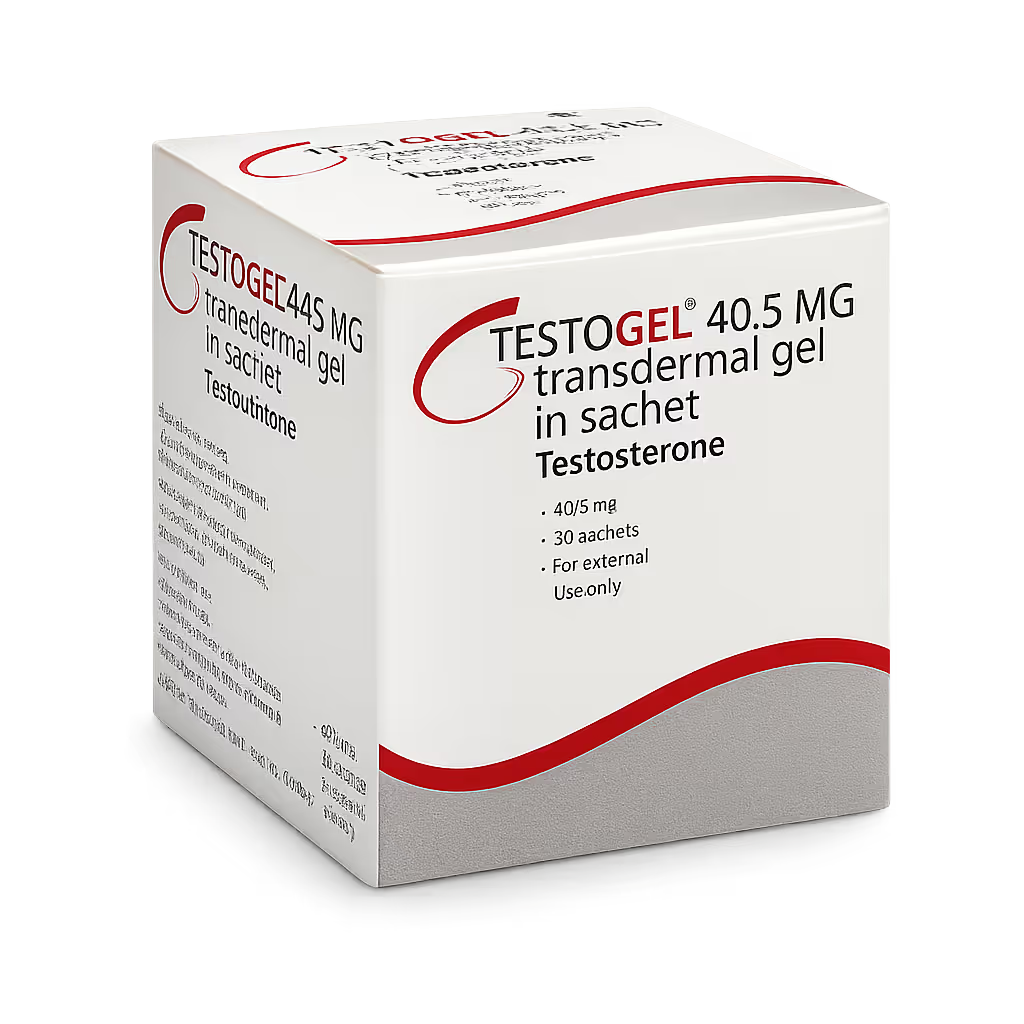
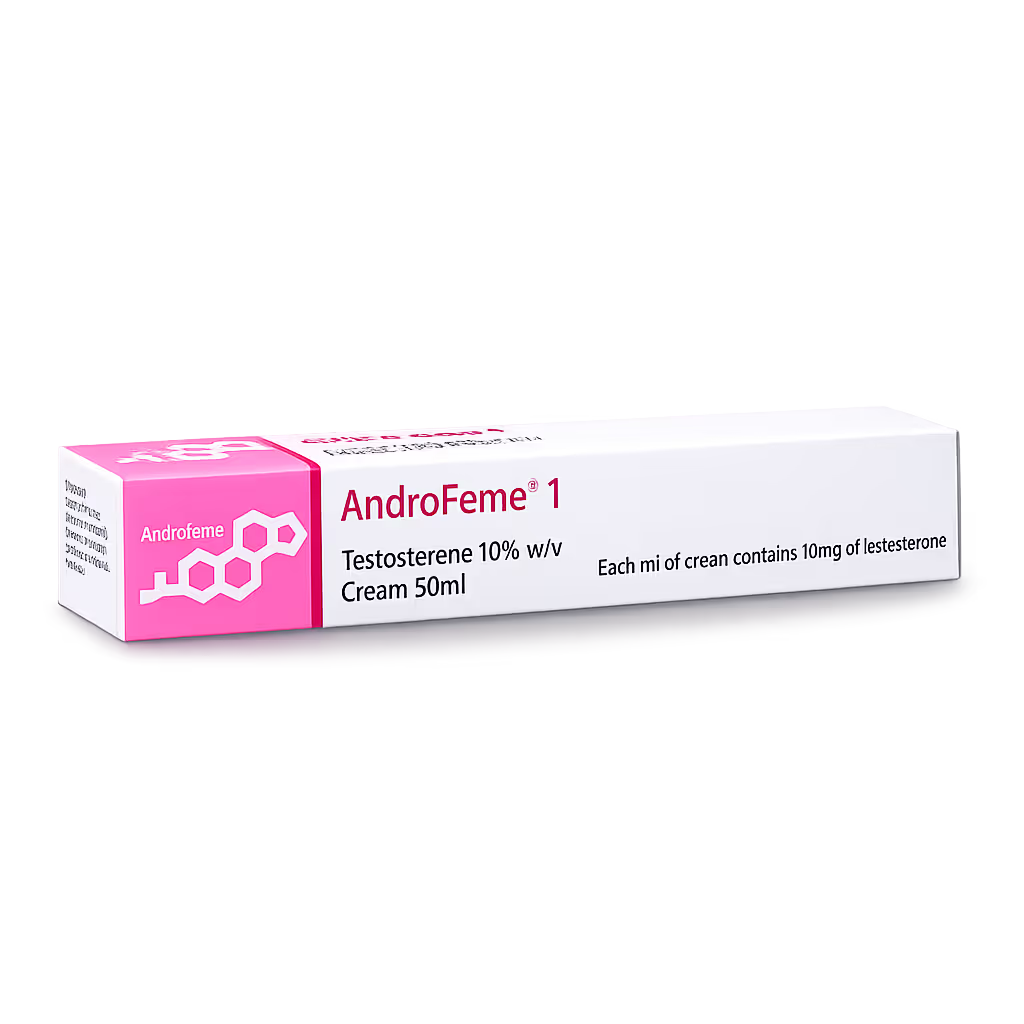
Testosterone gel that comes in sachets. It is sometimes prescribed off-label for low sexual desire in menopause, when standard HRT alone has not helped.
What the trial evidence shows:
A large 2019 systematic review and meta-analysis (Islam et al., 36 RCTs, over 8,000 women) [8] found that non-oral (transdermal) testosterone meaningfully improved sexual desire, satisfying sexual events, and orgasm in postmenopausal women compared with placebo, with no serious adverse events. Acne and unwanted hair growth were the main side effects.
An earlier meta-analysis [9] reached the same conclusions using testosterone in a transdermal patch.
Crucially, there are no published clinical trials of Testogel in women. All testosterone research in women uses other formulations (patches, creams). Testogel is a male-dosed gel used off-label at a fraction of the intended dose. This creates some dosing inconsistencies and can be a bit tricky for some women.
What the guidelines say:
NICE NG23 [3] recommends that healthcare professionals consider testosterone supplementation for menopausal women with low sexual desire if HRT alone has not worked. NICE's own 2024 review found no new evidence to expand this to other symptoms (such as mood, energy, or brain fog).
The BMS (2023) [4] echoes this position.
The Global Consensus Position Statement (2019) [6], endorsed by multiple international bodies including the RCOG, confirms that HSDD in postmenopausal women is the only well-supported indication for testosterone. The ISSWSH clinical practice guideline (2021) [7] advises that transdermal formulations at female-appropriate doses can be used off-label when no licensed product exists, but that informed consent about off-label use, benefits, and risks must be given.
References
[1] Besins Healthcare (UK) Ltd. Testogel: Why Testogel? (HCP website). 2025. Available at: https://www.testogel.co.uk/hcp. No PMID (promotional HCP content).
[2] Kaufman JM, Miller MG, Garwin JL et al. J Sex Med 2011;8(7):2079–2089. PMID: 21492400. https://doi.org/10.1111/j.1743-6109.2011.02265.x
[3] National Institute for Health and Care Excellence. Menopause: identification and management (NG23). Updated November 2024. Available at: https://www.nice.org.uk/guidance/ng23. No PMID (clinical guideline).
[4] British Menopause Society. BMS Statement on Testosterone. 2023. Available at: https://thebms.org.uk/2024/07/bms-statement-on-testosterone-2/. No PMID (clinical guideline).
[5] Panay N on behalf of the British Menopause Society. BMS Tool for Clinicians: Testosterone replacement in menopause. Post Reprod Health 2022;28(2):67–68. Available at: https://journals.sagepub.com/doi/10.1177/20533691221104266. No PMID (clinical guidance tool).
[6] Davis SR, Baber R, Panay N et al. J Clin Endocrinol Metab 2019;104(10):4660–4666. PMID: 31498871. https://doi.org/10.1210/jc.2019-01603
[7] Parish SJ, Simon JA, Davis SR et al. J Sex Med 2021;18(5):849–867. PMID: 33814355. https://doi.org/10.1016/j.jsxm.2020.10.009
[8] Islam RM, Bell RJ, Green S, Page MJ, Davis SR. Lancet Diabetes Endocrinol 2019;7(10):754–766. PMID: 31353194. https://doi.org/10.1016/S2213-8587(19)30189-5
[9] Achilli C, Pundir J, Ramanathan P, Sabatini L, Hamoda H, Panay N. Fertil Steril 2017;107(2):475–482.e15. PMID: 27916205. https://doi.org/10.1016/j.fertnstert.2016.10.028
[10] Gera R, Tayeh S, Chehade HE, Mokbel K. Anticancer Res 2018;38(12):6615–6620. PMID: 30504369. https://doi.org/10.21873/anticanres.13028
Testosterone

Related Articles
You might be intrested in reading...