
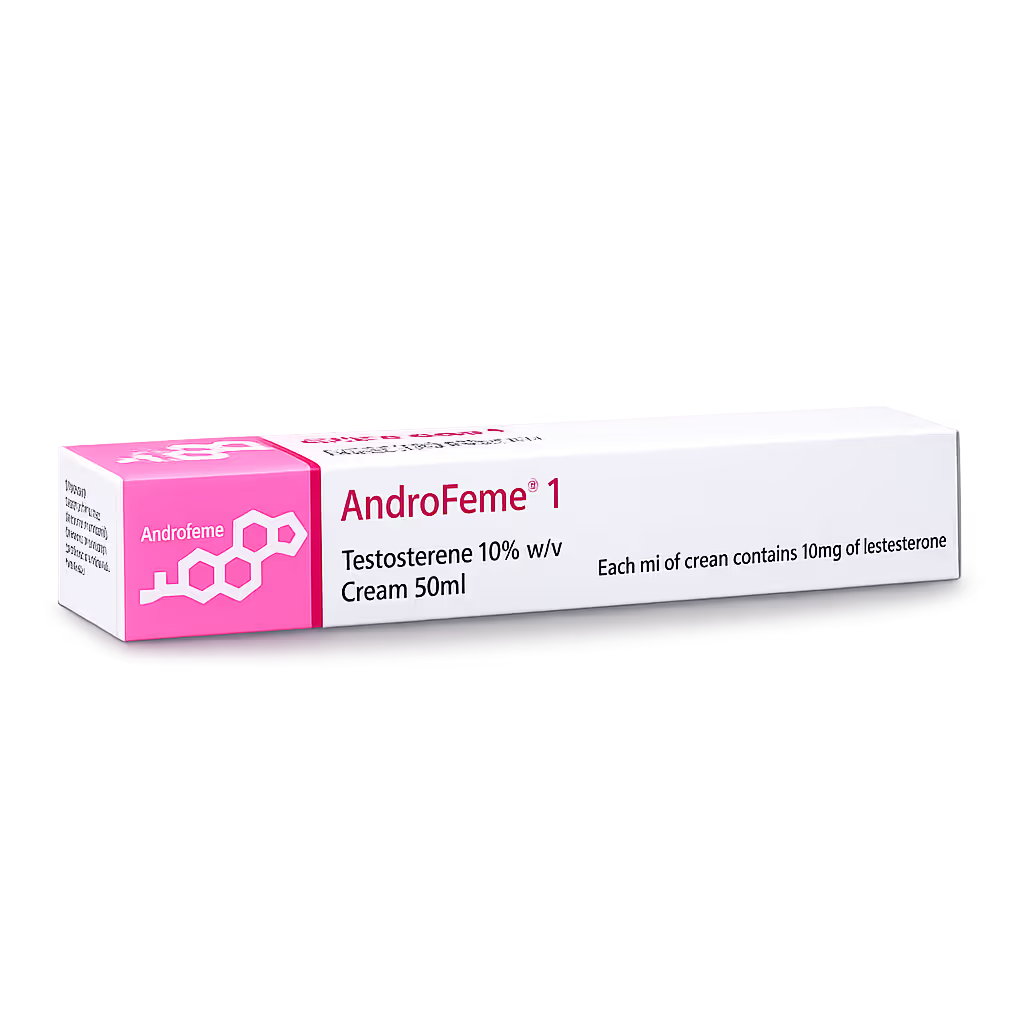
Androfeme testosterone cream
Can they prove what they say?
Yes. The quality evidence for transdermal testosterone in peri/menopausal women focuses almost exclusively on improving libido (eye roll). So, there is no robust evidence it improves energy, mood, brain fog, or other menopausal symptoms beyond libido, but that is hopefully changing soon.

What it is:
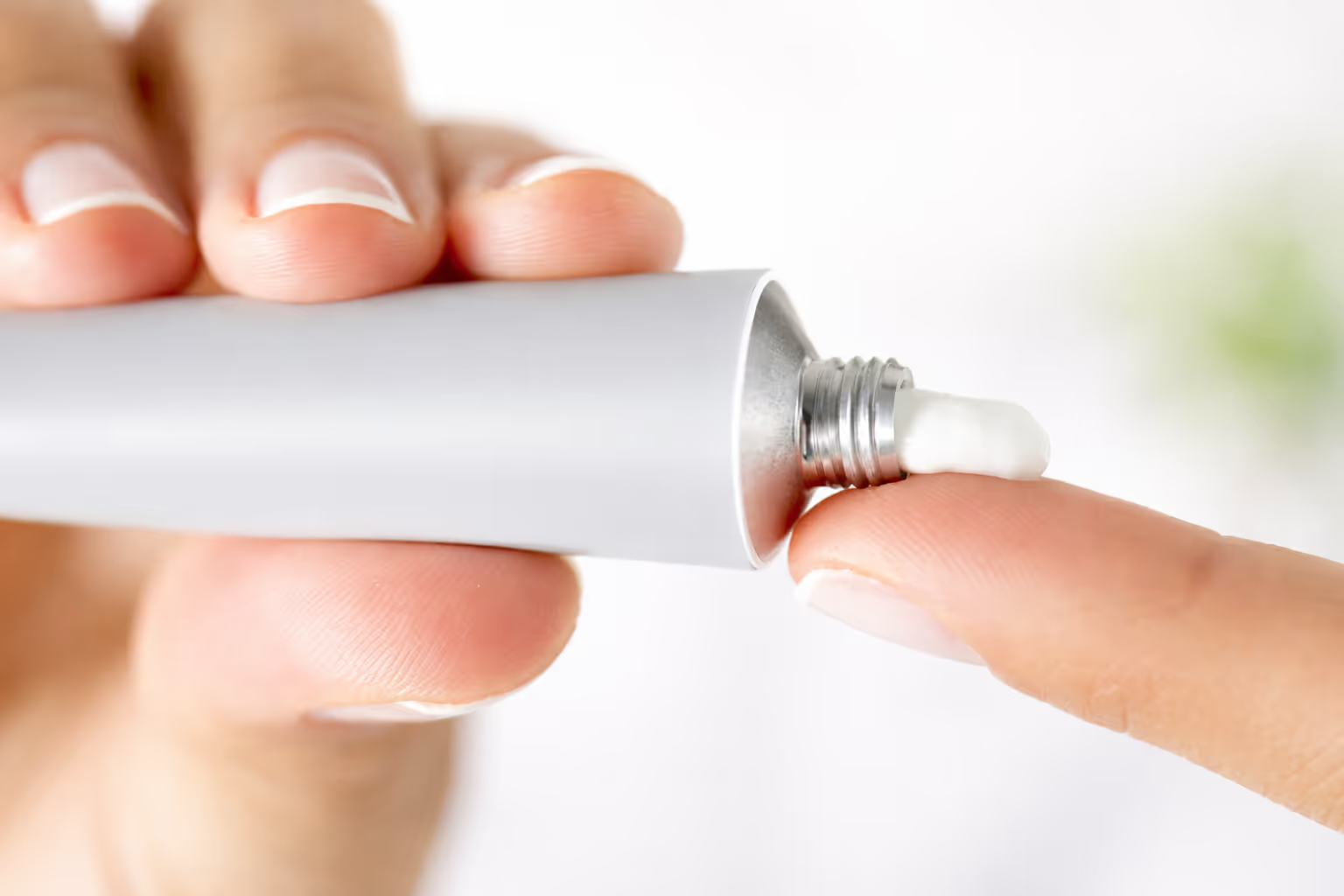
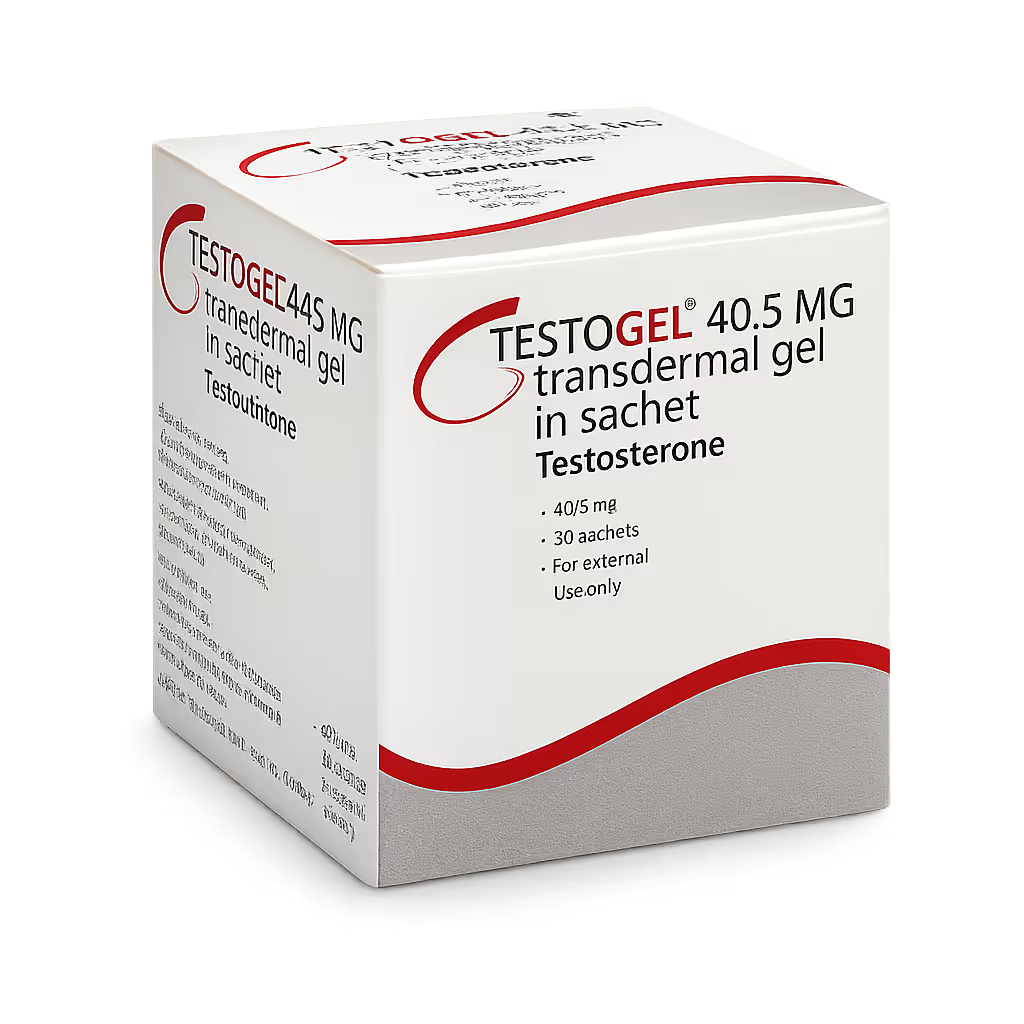
Androfeme is a 1% testosterone cream in a 50ml tube with a graduated applicator syringe. Unlike Testogel, a male product that women use at a much lower dose, Androfeme was specifically formulated for women, making accurate dosing considerably more straightforward.
What do the guidelines say?
Every major guideline body says the same thing: testosterone can be considered for low sexual desire (HSDD) after menopause, but only if HRT on its own hasn't done the job first.
NICE (the UK's national guideline, updated 2024) has recommended this since 2015 and hasn't changed its position [1].
The British Menopause Society says it is the only evidence-based reason to add testosterone to HRT, and that other causes of low libido (relationship issues, medication side effects, mental health) should be ruled out first [2]. In July 2024, the BMS went further and issued a public statement specifically pushing back against claims that testosterone helps with energy, mood, brain fog, or bone loss, saying there is no evidence for any of that [3].
The International Menopause Society's Global Consensus (2019), endorsed by multiple international bodies, agrees: HSDD is the only supported indication, and there are no established reasons to prescribe testosterone for anything else [4].
The ISSWSH guideline (2021) specifically names AndroFeme as the only product approved for women (at that time, in Australia) and supports a "moderate" therapeutic benefit for HSDD [8].
What does the evidence say?
The strongest evidence comes from a large meta-analysis published in The Lancet in 2019 (Islam et al.), which combined data from 36 randomised controlled trials involving 8,480 women. It found that transdermal testosterone significantly improved sexual desire, arousal, orgasm, pleasure, and self-image, and reduced distress, compared to placebo [6]. An earlier meta-analysis (Achilli et al. 2017), looking at 7 RCTs and 3,035 women using testosterone patches specifically, found the same pattern: more satisfying sexual episodes, more desire, less distress [7]. Neither review found an increase in serious side effects, though acne and hair growth were more common with testosterone.
For AndroFeme specifically, there is one small RCT (El-Hage 2007) testing the actual product in 36 postmenopausal women. It confirmed that the cream raised testosterone levels into the expected range, but the trial was small and the published efficacy data are limited [5]. The product's regulatory approval was based largely on the broader class evidence above, not on extensive product-specific trials.
For the broader claims (mood, energy, cognition, bone, muscle), the Islam meta-analysis found no effects on body composition, musculoskeletal outcomes, or cognitive measures [6]. The BMS has stated this explicitly in both its clinician guidance [2] and its 2024 public statement [3]. The Global Consensus reached the same conclusion [4]. Some women do report feeling better in these areas, but controlled trials have not confirmed it.
Short-term safety looks reassuring across the trial data, with no increased risk of breast cancer, cardiovascular disease, or blood clots [6][7]. The main side effects are acne and increased hair growth, which are dose-related. Long-term safety beyond two years is genuinely unknown, and the product's own information says so.
References
[1] NICE. Menopause: identification and management. NICE guideline [NG23]. Published November 2015, updated November 2024. https://www.nice.org.uk/guidance/ng23
[2] British Menopause Society. Tool for Clinicians: Testosterone Replacement in Menopause. January 2026. https://thebms.org.uk/publications/tools-for-clinicians/
[3] British Menopause Society. BMS Statement on Testosterone. July 2024. https://thebms.org.uk/2024/07/bms-statement-on-testosterone-2/
[4] Davis SR, Baber R, Panay N et al. Global Consensus Position Statement on the Use of Testosterone Therapy for Women. J Clin Endocrinol Metab 2019;104(10):4660-4666. PMID: 31498871. https://pubmed.ncbi.nlm.nih.gov/31498871/
[5] El-Hage G, Eden JA, Manga RZ. A double-blind, randomized, placebo-controlled trial of the effect of testosterone cream on the sexual motivation of menopausal hysterectomized women with hypoactive sexual desire disorder. Climacteric 2007;10(4):335-343. PMID: 17653960. https://pubmed.ncbi.nlm.nih.gov/17653960/
[6] Islam RM, Bell RJ, Green S, Page MJ, Davis SR. Safety and efficacy of testosterone for women: a systematic review and meta-analysis of randomised controlled trial data. Lancet Diabetes Endocrinol 2019;7(10):754-766. PMID: 31353194. https://pubmed.ncbi.nlm.nih.gov/31353194/
[7] Achilli C, Pundir J, Ramanathan P, Sabatini L, Hamoda H, Panay N. Efficacy and safety of transdermal testosterone in postmenopausal women with hypoactive sexual desire disorder: a systematic review and meta-analysis. Fertil Steril 2017;107(2):475-482. PMID: 27916205. https://pubmed.ncbi.nlm.nih.gov/27916205/
[8] Parish SJ, Simon JA, Davis SR et al. International Society for the Study of Women's Sexual Health Clinical Practice Guideline for the Use of Systemic Testosterone for Hypoactive Sexual Desire Disorder in Women. J Sex Med 2021;18(5):849-867. PMID: 33814355. https://pubmed.ncbi.nlm.nih.gov/33814355/
Testosterone

Related Articles
You might be intrested in reading...