
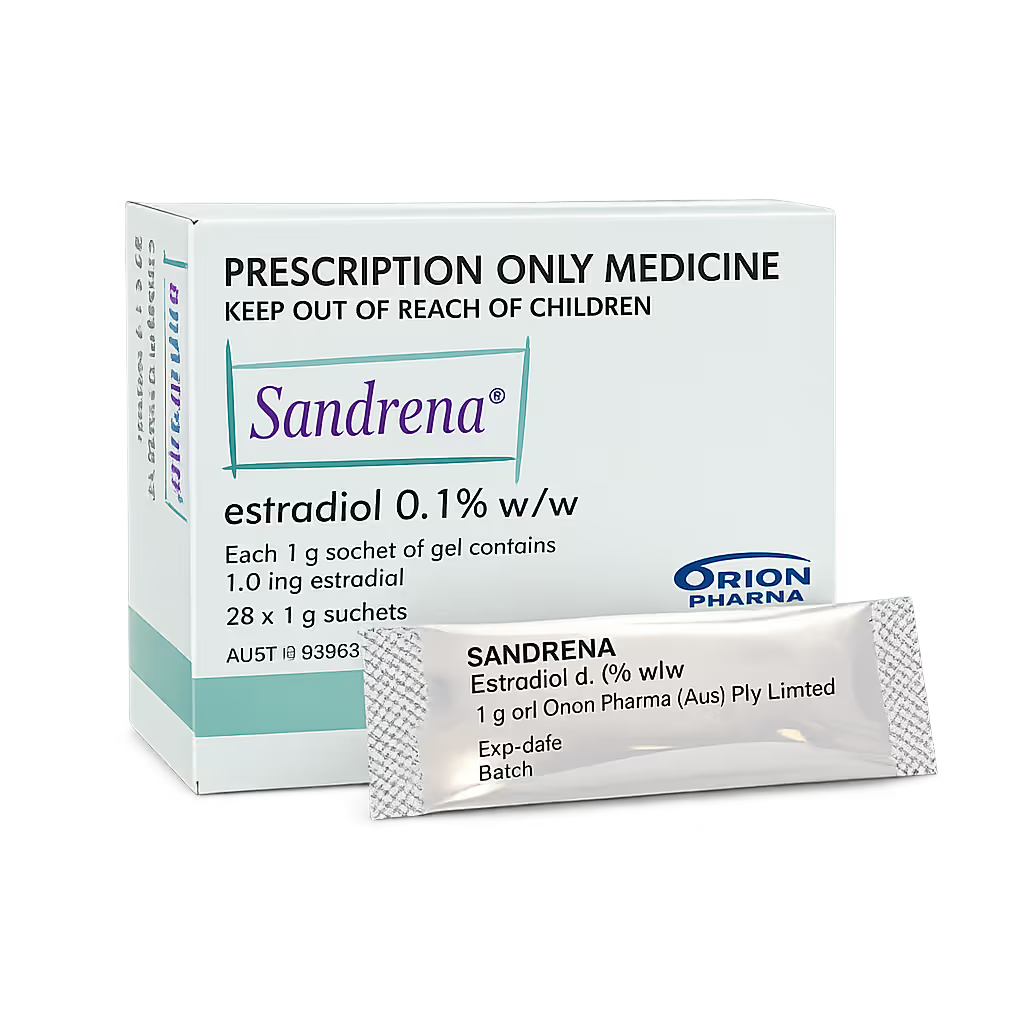
Sandrena
Can they prove what they say?
Yes. Sandrena is an oestradiol gel proven to relieve oestrogen deficiency symptoms. The high-quality, high-volume of evidence, plus its safety profile make it a first-line HRT choice in current UK/international guidelines.




What it is:
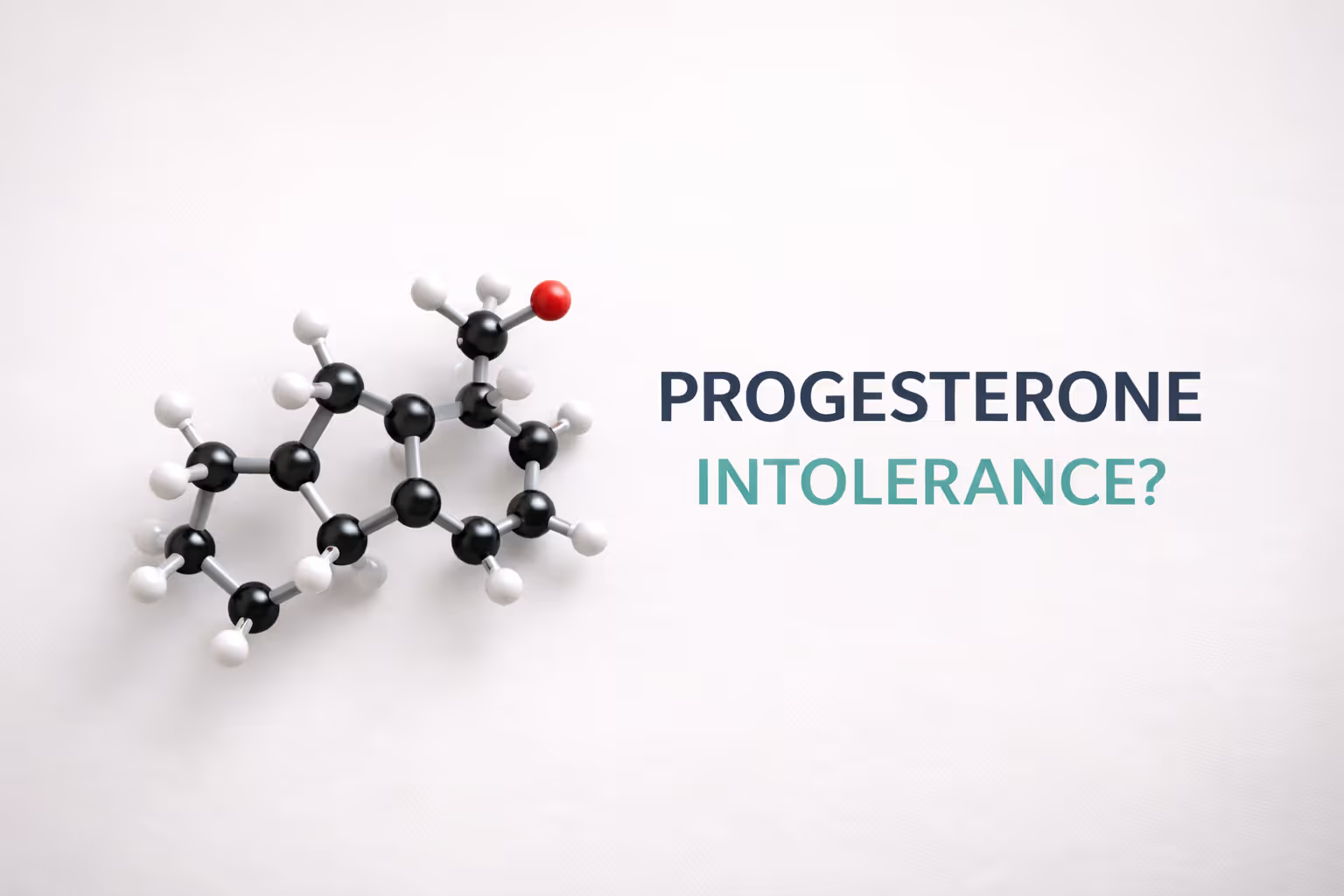
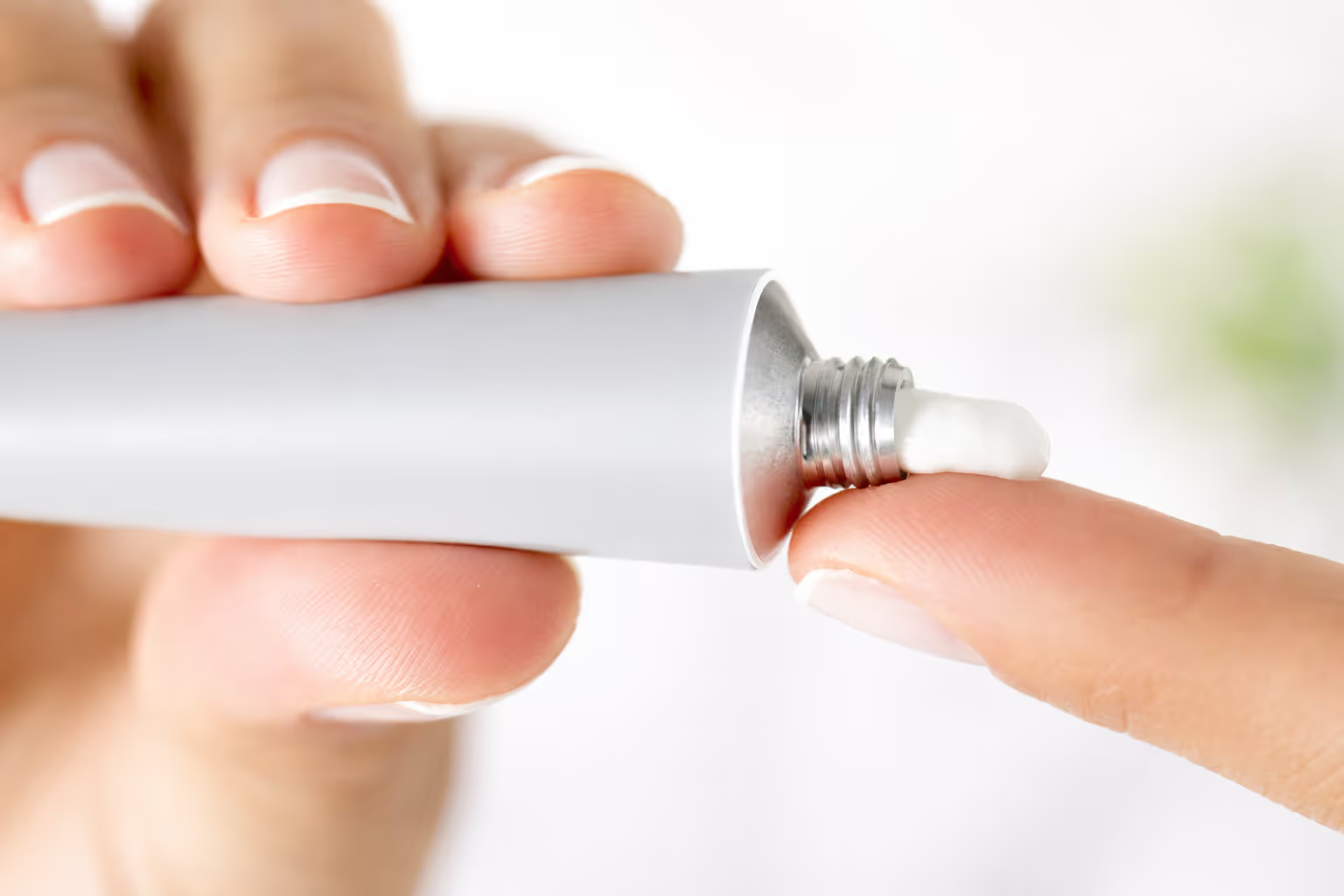
Sandrena is a prescription-only transdermal oestradiol gel used as part of HRT to relieve menopause symptoms and, in some women, help protect bone.
What the guidelines say
- NICE NG23 (updated November 2024) [1] recommends offering HRT to women with vasomotor symptoms. It also recommends considering HRT for depressive symptoms, sleep problems, and genitourinary symptoms that arise around menopause. NICE specifically recommends considering the transdermal route over oral HRT for women at raised VTE risk, including those with a BMI over 30. NICE does not name Sandrena by brand, but recommends the transdermal oestradiol category it belongs to.
- The British Menopause Society/Women's Health Concern (BMS/WHC 2020) [2] states that transdermal oestradiol is unlikely to increase the risk of VTE or stroke above baseline, unlike oral oestrogen. The BMS recommends transdermal oestradiol as the first-choice route for women with risk factors, and states that arbitrary limits should not be placed on duration. Sandrena is not named specifically, but its active ingredient and delivery route are recommended.
- NAMS (2022) [3] confirms that HRT remains the most effective treatment for vasomotor symptoms and genitourinary syndrome of menopause, and that it prevents bone loss. NAMS notes that transdermal routes may reduce VTE and stroke risk compared to oral oestrogen.
Evidence for transdermal oestradiol as a class
A 2025 meta-analysis of 41 RCTs covering 14,743 women found transdermal oestradiol gel among the highest-ranked treatments for reducing hot flush frequency, with a safety profile comparable to placebo for serious adverse events [6].
A 2017 Cochrane systematic review of 22 RCTs (43,637 women) confirmed that HRT significantly reduces fracture risk [7]. It also showed that combined HRT (oestrogen plus progestogen) carries small absolute increases in risk of VTE, stroke, and breast cancer in older postmenopausal women. However, most of this data came from the US Women's Health Initiative, which used oral conjugated equine oestrogen, not transdermal oestradiol. Observational data consistently suggest the transdermal route is safer from a clot and stroke perspective, and this is what major guidelines reflect, but head-to-head randomised trial data comparing transdermal and oral routes directly are limited.
Evidence for specific symptoms:
- Hot flushes and night sweats: Strongest evidence. All three major guidelines recommend HRT as first-line. The 2025 network meta-analysis [6] places transdermal oestradiol gel among the most effective options.
- Sleep: NAMS (2022) [3] notes HRT may improve chronic insomnia in menopausal women, with transdermal oestradiol showing benefit particularly in the perimenopause. Evidence is positive but not as robust as for vasomotor symptoms.
- Mood and depression: NAMS (2022) [3] reports antidepressant-level effects of oestrogen therapy in perimenopausal women with depression. NICE (2024) [1] recommends considering HRT for depressive symptoms arising around menopause that don't meet the threshold for a clinical depression diagnosis.
- Genitourinary symptoms (vaginal dryness, painful sex, urinary changes): Systemic HRT does help, but NICE (2024) [1] specifically recommends vaginal oestrogen as the primary treatment for genitourinary symptoms, including for women already on systemic HRT. Sandrena alone may not fully address these symptoms.
- Bone health: HRT is an effective preventive treatment. Both the Cochrane review [7] and NICE [1] confirm fracture reduction. Sandrena carries a specific licence for osteoporosis prevention in postmenopausal women who cannot use other treatments.
- Joint pain, cognitive function, and libido: Evidence is more limited and largely observational. These outcomes fall outside the specific licensed indications for Sandrena and cannot be robustly claimed on the basis of current trial data alone.
References
[1] NICE. Menopause: diagnosis and management. Guideline NG23. Published 2015, updated November 2024. Available at: https://www.nice.org.uk/guidance/ng23. No PMID (clinical guideline).
[2] British Menopause Society and Women's Health Concern. BMS/WHC 2020 recommendations on hormone replacement therapy in menopausal women. Updated September 2025. Available at: https://thebms.org.uk/publications/consensus-statements/bms-whcs-2020-recommendations-on-hormone-replacement-therapy-in-menopausal-women/. No PMID (clinical guideline).
[3] The North American Menopause Society Advisory Panel. The 2022 hormone therapy position statement of The North American Menopause Society. Menopause 2022;29(7):767-794. PMID: 35797481. https://doi.org/10.1097/GME.0000000000002028
[4] Hirvonen E et al. Transdermal oestradiol gel in the treatment of the climacterium: a comparison with oral therapy. Br J Obstet Gynaecol 1997;104 Suppl 16:19-25. PMID: 9389779. https://doi.org/10.1111/j.1471-0528.1997.tb11563.x
[5] Hirvonen E et al. Effect of an estradiol gel with monthly or quarterly progestogen on menopausal symptoms and bleeding. Climacteric 2000;3(4):262-70. PMID: 11910586. https://doi.org/10.1080/13697130008500128
[6] Oliveira Amador WF et al. Pharmacological treatments for menopausal vasomotor symptoms: a systematic review and Bayesian network meta-analysis of efficacy and safety. Eur J Obstet Gynecol Reprod Biol 2025;312:114552. PMID: 40592206. https://doi.org/10.1016/j.ejogrb.2025.114552
[7] Marjoribanks J et al. Long-term hormone therapy for perimenopausal and postmenopausal women. Cochrane Database Syst Rev 2017;1(1):CD004143. PMID: 28093732. https://doi.org/10.1002/14651858.CD004143.pub5
Oestradiol

Related Articles
You might be intrested in reading...