
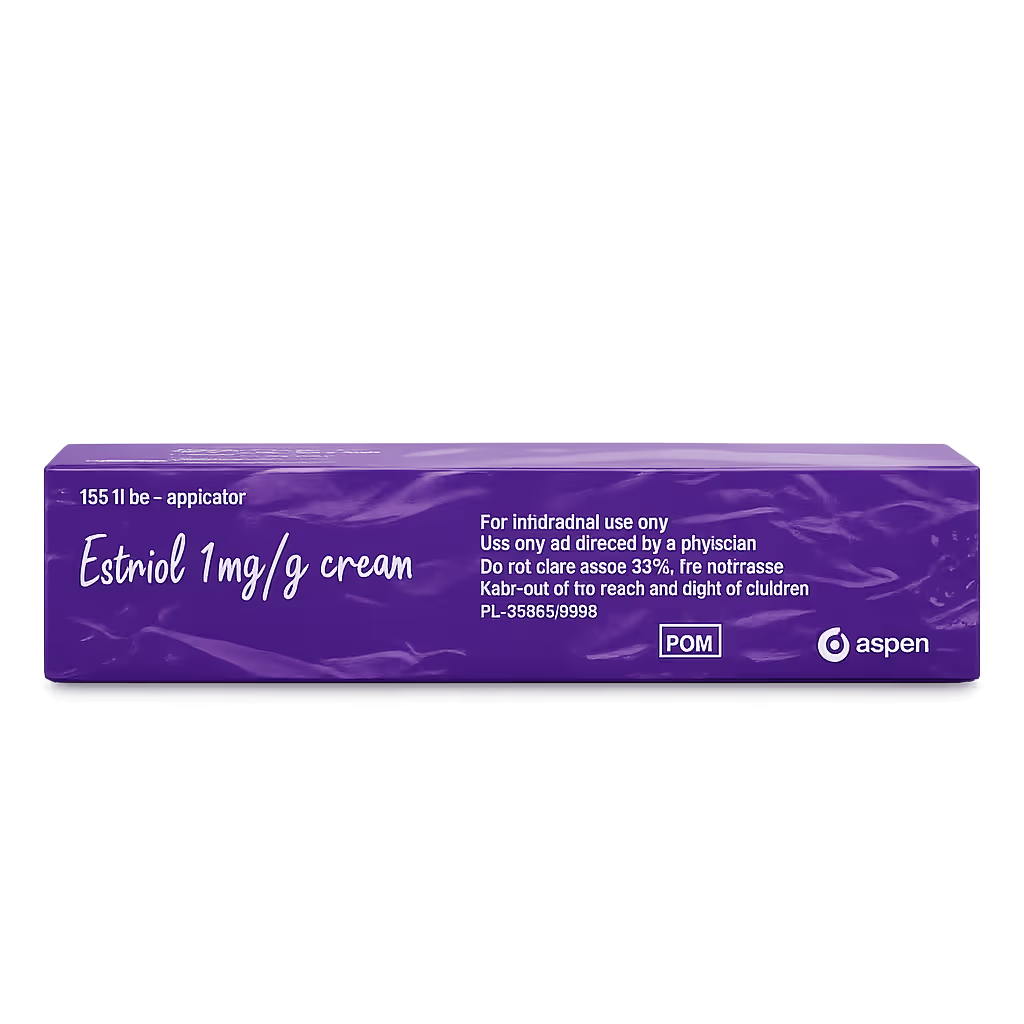
Estriol cream (formerly sold as Ovestin)
Can they prove what they say?
Yes. Vaginal oestrogen has been studied in thousands of women across dozens of trials, and every major guideline body recommends it for menopausal vaginal symptoms.The cream scores slightly higher than vaginal tablets like Vagifem because there's a bit more quality evidence for the cream.


What it is:
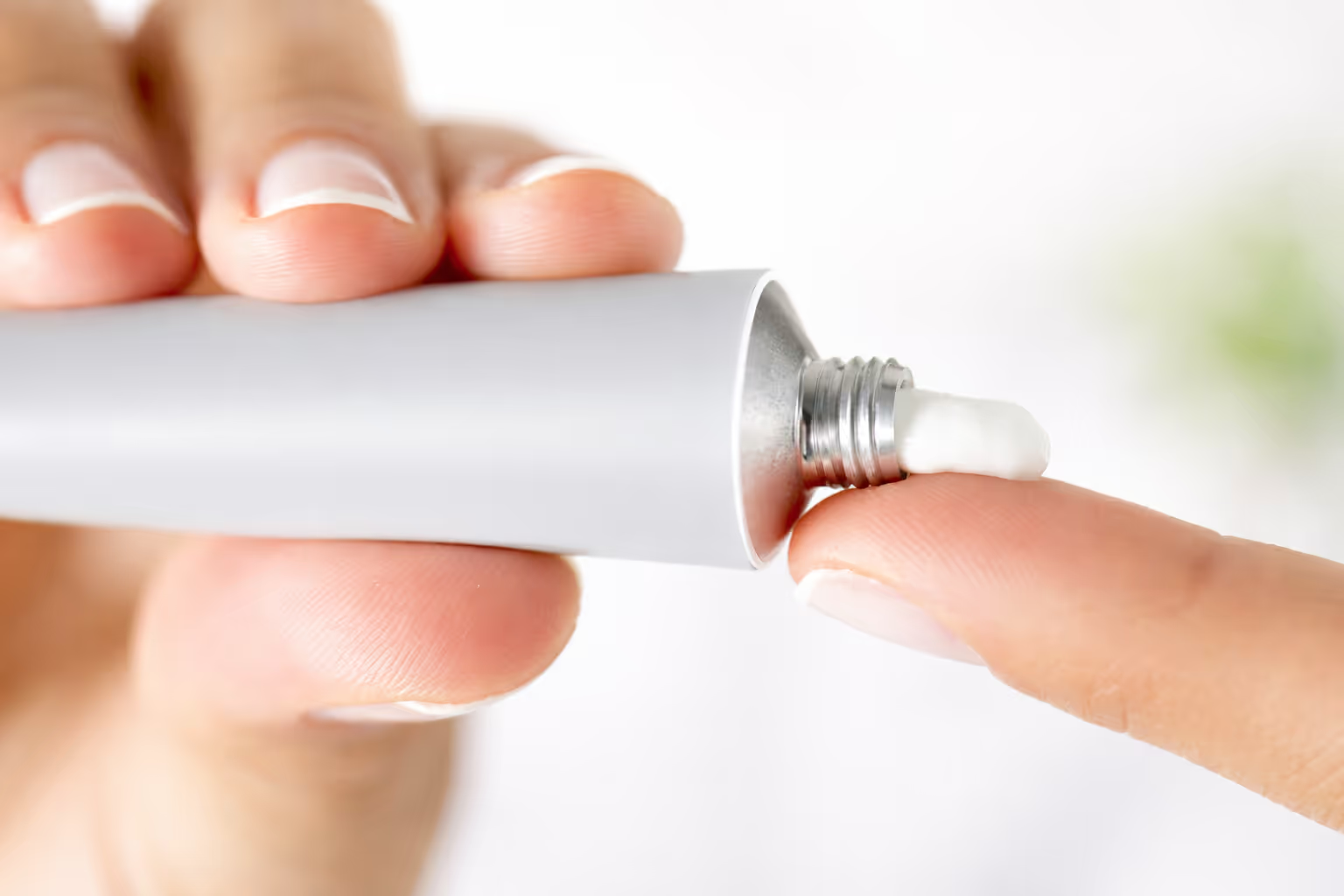
Estriol 0.1% vaginal cream (also known as Ovestin/Ovesse is a vaginal cream containing estriol (a weak, natural oestrogen) used to treat vaginal dryness, soreness, itching, and painful sex caused by menopause.
What do the guidelines say?
NICE NG23 (updated November 2024) recommends offering vaginal oestrogen to women with genitourinary symptoms of menopause, including those already on systemic HRT, and states treatment should continue for as long as needed [1].
The British Menopause Society's consensus statement on GSM (2025) agrees, noting that systemic absorption from vaginal oestrogen is minimal and that a progestogen is not needed alongside it at maintenance doses [2].
The NAMS position statement (2020) confirms low-dose vaginal oestrogens are effective for moderate to severe GSM [12].
The EMAS clinical guide (2021) specifically names estriol preparations among effective vaginal oestrogen options and notes a Cochrane review found no difference in efficacy between different preparations [13].
What does the evidence say?
A Cochrane review (Lethaby et al, 2016) of 30 RCTs found that vaginal oestrogen creams, tablets, pessaries, and rings were all more effective than placebo for relieving vaginal atrophy symptoms, with no significant difference between the different types [3].
A large systematic review and meta-analysis (Ali et al, 2024) of 18 RCTs involving 4,723 women confirmed that intravaginal oestrogen significantly reduced vaginal pH and painful sexcompared with placebo [4]. A
nother systematic review (Biehl et al, 2019) of 53 studies found all vaginal oestrogens were superior to placebo for both objective signs and subjective symptoms of GSM [5]. A separate systematic review (Rahn et al, 2014) of 44 studies found that all commercially available vaginal oestrogens improved dryness, painful sex, urinary urgency, and incontinence, with serum oestradiol remaining within postmenopausal norms [14].
Regarding estriol specifically, a systematic review (Weber et al, 2017) identified 22 studies (13 controlled trials) involving 1,217 women and confirmed the efficacy of vaginal estriol for treating vulvovaginal atrophy with few adverse effects [9]. Serum estriol levels rose transiently after application but did not remain elevated at 6-month follow-up, suggesting minimal long-term systemic exposure [9].
Ovestin itself was used in several small RCTs from the 1980s. Kicovic et al (1980) treated 74 postmenopausal women with Ovestin cream or suppositories and found favourable effects on vaginal cytology and clinical findings, with healthy endometrium maintained [6]. Luisi et al (1980) compared Ovestin cream with conjugated oestrogen cream in 14 women and found Ovestin was effective for vaginal atrophy while causing no significant rise in systemic oestrogen levels, unlike the comparator [7]. Mattsson & Cullberg (1983) found subjective relief in all 30 treated patients, confirmed by colposcopy [8]. These studies are small and old, but their findings are consistent with the much larger body of evidence for vaginal oestrogen as a class.
On safety in breast cancer survivors, a 2025 meta-analysis (Beste et al) of 8 observational studies involving over 24,000 breast cancer survivors found no increased risk of recurrence, breast cancer-specific mortality, or overall mortality with vaginal oestrogen use [10].
REFERENCES
[1] National Institute for Health and Care Excellence. Menopause: identification and management (NG23). Updated November 2024. Available at: https://www.nice.org.uk/guidance/ng23. No PMID (clinical guideline).
[2] British Menopause Society. Consensus statement on Genitourinary Syndrome of Menopause (GSM). 2025. Available at: https://thebms.org.uk/publications/consensus-statements/genitourinary-syndrome-of-menopause-gsm/. No PMID (clinical guideline).
[3] Lethaby A, Ayeleke RO, Roberts H. Local oestrogen for vaginal atrophy in postmenopausal women. Cochrane Database Syst Rev 2016;(8):CD001500. PMID: 27577677. https://pubmed.ncbi.nlm.nih.gov/27577677/
[4] Ali A, Iftikhar A, Tabassum M et al. Efficacy and safety of intravaginal estrogen in the treatment of atrophic vaginitis: a systematic review and meta-analysis. J Menopausal Med 2024;30(2):88-103. PMID: 39315501. https://pubmed.ncbi.nlm.nih.gov/39315501/
[5] Biehl C, Plotsker O, Engel S et al. A systematic review of the efficacy and safety of vaginal estrogen products for the treatment of genitourinary syndrome of menopause. Menopause 2019;26(4):431-453. PMID: 30363010. https://pubmed.ncbi.nlm.nih.gov/30363010/
[6] Kicovic PM, Cortes-Prieto J, Milojevic S et al. The treatment of postmenopausal vaginal atrophy with Ovestin vaginal cream or suppositories: clinical, endocrinological and safety aspects. Maturitas 1980;2(4):275-282. PMID: 6785553. https://pubmed.ncbi.nlm.nih.gov/6785553/
[7] Luisi M, Franchi F, Kicovic PM. A group-comparative study of effects of Ovestin cream versus Premarin cream in post-menopausal women with vaginal atrophy. Maturitas 1980;2(4):311-319. PMID: 6262604. https://pubmed.ncbi.nlm.nih.gov/6262604/
[8] Mattsson LA, Cullberg G. A clinical evaluation of treatment with estriol vaginal cream versus suppository in postmenopausal women. Acta Obstet Gynecol Scand 1983;62(5):397-401. PMID: 6421083. https://pubmed.ncbi.nlm.nih.gov/6421083/
[9] Weber MA, Limpens J, Groenevelt S et al. The efficacy and safety of estriol to treat vulvovaginal atrophy in postmenopausal women: a systematic literature review. Climacteric 2017;20(4):321-330. PMID: 28622049. https://pubmed.ncbi.nlm.nih.gov/28622049/
[10] Beste ME, Kaunitz AM, McKinney JA et al. Vaginal estrogen use in breast cancer survivors: a systematic review and meta-analysis of recurrence and mortality risks. Am J Obstet Gynecol 2025;232(3):262-270. PMID: 39521301. https://pubmed.ncbi.nlm.nih.gov/39521301/
[11] Bleibel B, Nguyen H. Genitourinary syndrome of menopause. Br J Gen Pract 2025;75(761):583-584. Available at: https://bjgp.org/content/75/761/583. No PMID available.
[12] The North American Menopause Society. The 2020 genitourinary syndrome of menopause position statement. Menopause 2020;27(9):976-992. PMID: 32852449. https://pubmed.ncbi.nlm.nih.gov/32852449/
[13] Hirschberg AL, Bitzer J, Cano A et al. Topical estrogens and non-hormonal preparations for postmenopausal vulvovaginal atrophy: an EMAS clinical guide. Maturitas 2021;148:55-61. Available at: https://www.maturitas.org/article/S0378-5122(21)00061-X/fulltext. No PMID listed.
[14] Rahn DD, Carberry C, Sanses TV et al. Vaginal estrogen for genitourinary syndrome of menopause: a systematic review. Obstet Gynecol 2014;124(6):1147-1156. PMID: 25415166. https://pubmed.ncbi.nlm.nih.gov/25415166/
Estriol

Related Articles
You might be intrested in reading...