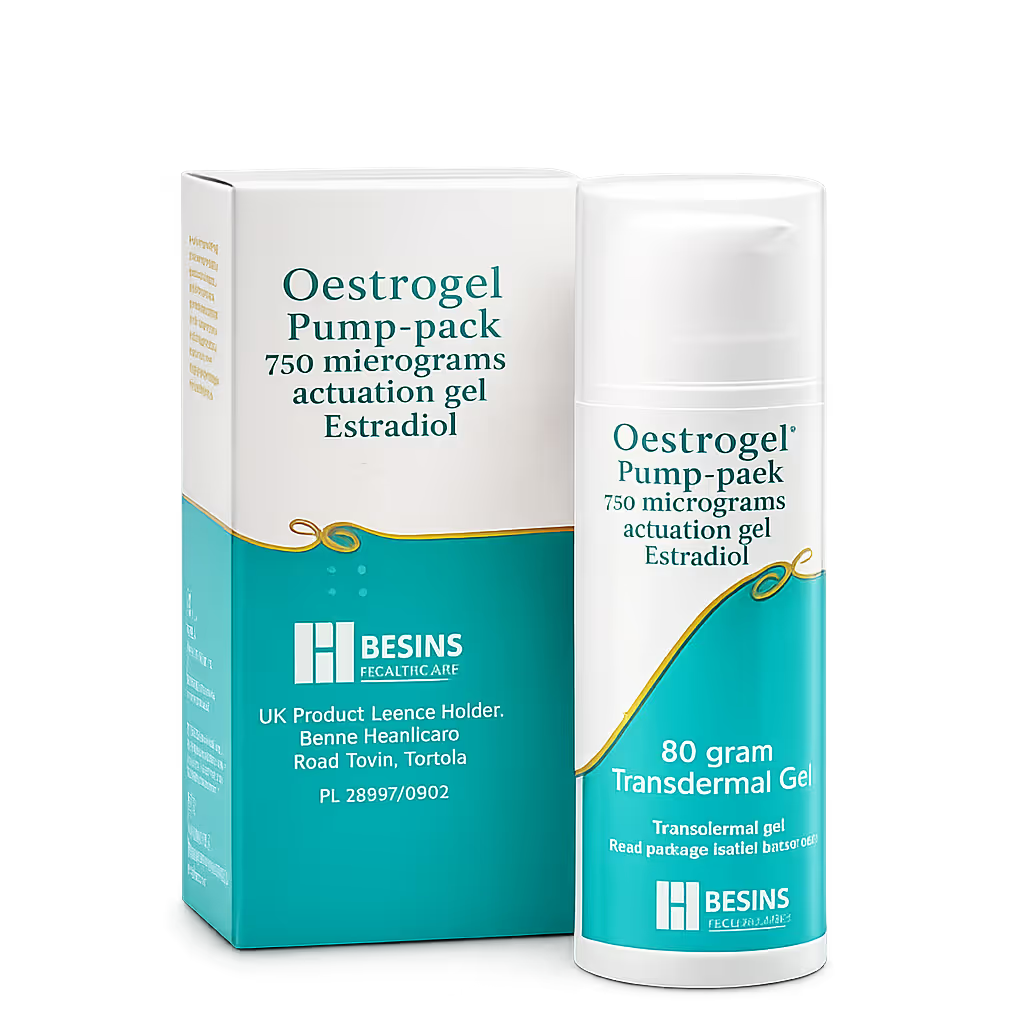
Oestrogel
Can they prove what they say?
Yes. Oestrogel is an oestradiol gel proven to relieve oestrogen deficiency symptoms. The high-quality, high-volume of evidence, plus its safety profile make it a first-line HRT choice in current UK/international guidelines.




What it is:
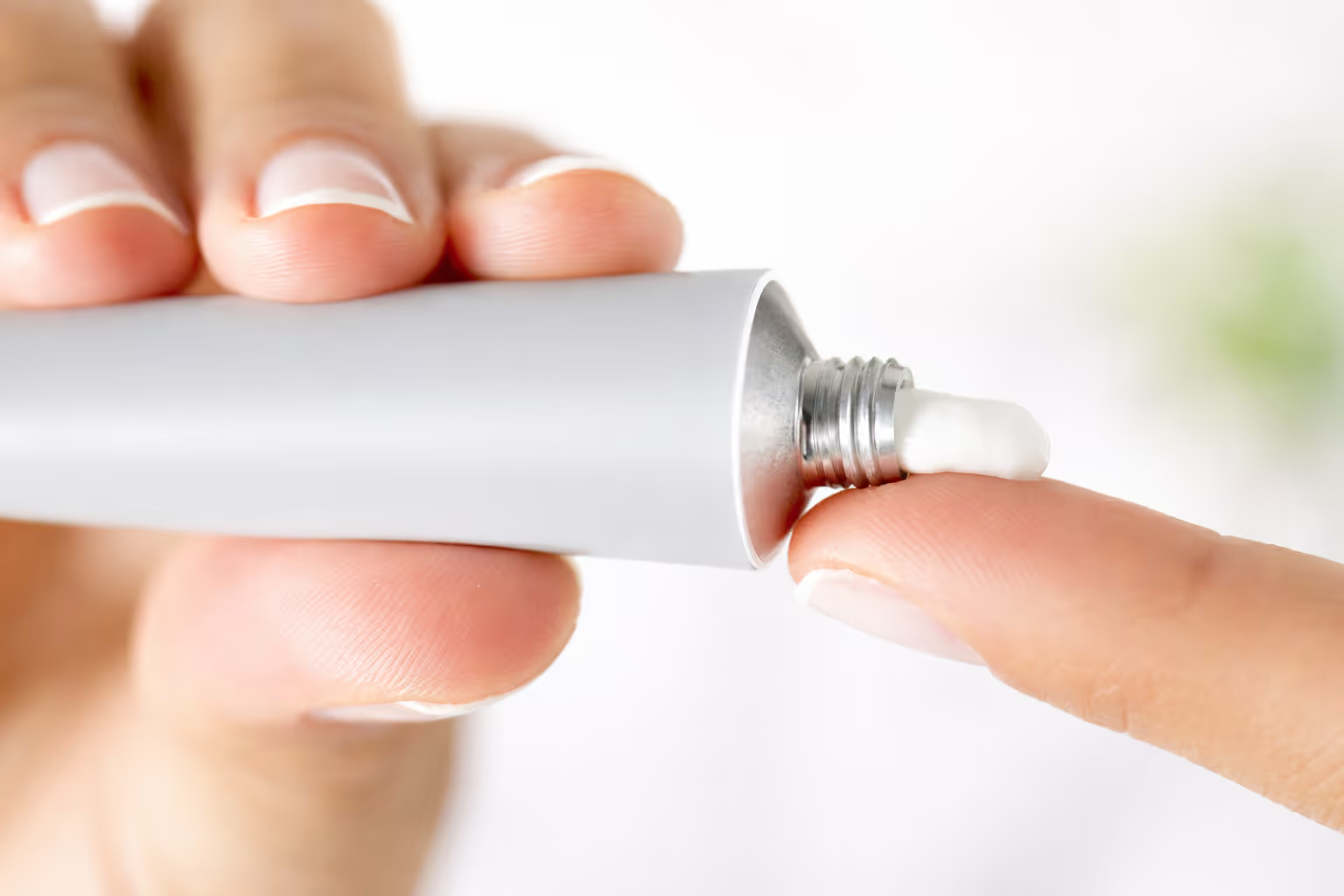
A prescription-only HRT gel applied daily to the skin. It contains oestradiol, a body-identical form of oestrogen.
What do guidelines say?
NICE guideline NG23 (updated November 2024) recommends offering HRT to women with vasomotor symptoms and states that transdermal HRT should be considered over oral HRT in women with elevated clot risk, including those with a BMI over 30 [1]. The BMS/WHC 2020 Consensus Statement goes further, stating that transdermal oestradiol is unlikely to increase VTE or stroke risk above that of non-users, and recommends it as the first-choice route in women with risk factors [2]. The North American Menopause Society 2022 Position Statement calls HRT the most effective treatment for vasomotor symptoms and confirms that transdermal routes may reduce VTE and stroke risk compared to oral [3]. None of these guidelines name Oestrogel by brand, but they recommend the product category (transdermal estradiol gel) clearly.
What does the evidence say about Oestrogel?
Oestrogel was studied in a multi-centre, double-blind, placebo-controlled phase 3 RCT in 221 postmenopausal women [4]. Results showed a statistically significant reduction in moderate-to-severe hot flushes at 12 weeks compared to placebo. Tolerability was acceptable with more oestrogen-related side effects at the higher dose.
A 2025 meta-analysis of 41 RCTs (n=14,743) found transdermal oestradiol gel ranked among the most effective pharmacological treatments for reducing vasomotor symptom frequency [5].
What does the evidence say about individual claims?
- Hot flushes and night sweats: Well-supported by RCT evidence. Both the branded product trial and wider evidence for transdermal oestradiol confirm significant reduction in frequency and severity [4][5].
- Bone protection: Oestrogel is licensed for osteoporosis prevention in high-risk postmenopausal women who cannot use other osteoporosis medicines. HRT's ability to maintain bone mineral density is established in the literature, and NAMS (2022) confirms it has been shown to prevent bone loss and fracture [3]. However, NICE and the National Osteoporosis Guideline Group note that HRT is not first-line for osteoporosis in women over 60, and the licensed indication for Oestrogel specifically reserves it for those intolerant of other options [1][2].
- Lower risk of blood clots than oral HRT: A 2018 meta-analysis by Scarabin found that oral but not transdermal oestrogen increased VTE risk, and this finding is endorsed by both NICE NG23 and the BMS [2][6]. The claim is accurate for the category as a whole, not just Oestrogel specifically.
- Bypasses first-pass liver metabolism, producing stable oestradiol levels: Transdermal delivery avoids hepatic first-pass processing, which is why the clot risk profile differs from oral preparations.
- Mood, sleep, vaginal dryness: The licensed indications focus on vasomotor symptoms and osteoporosis prevention. Mood and sleep improvements are plausible secondary benefits (largely mediated by reducing vasomotor symptoms), and are supported by observational and some trial evidence cited in the NAMS 2022 position statement. Vaginal dryness may improve with systemic HRT but NICE also recommends vaginal oestrogen separately for genitourinary symptoms [1][3].
References
[1] National Institute for Health and Care Excellence. Menopause: identification and management. NICE Guideline NG23. 2015 (updated November 2024). Available at: https://www.nice.org.uk/guidance/ng23. No PMID (clinical guideline).
[2] British Menopause Society and Women's Health Concern. BMS/WHC 2020 Recommendations on hormone replacement therapy in menopausal women. 2020 (updated 2025). Available at: https://thebms.org.uk/publications/consensus-statements/bms-whcs-2020-recommendations-on-hormone-replacement-therapy-in-menopausal-women/. No PMID (clinical guideline).
[3] NAMS Advisory Panel. The 2022 hormone therapy position statement of The North American Menopause Society. Menopause 2022;29(7):767-794. PMID: 35797481. https://doi.org/10.1097/GME.0000000000002028
[4] Archer D F et al. Percutaneous 17beta-estradiol gel for the treatment of vasomotor symptoms in postmenopausal women. Menopause 2003;10(6):516-521. PMID: 14627859. https://doi.org/10.1097/01.GME.0000070526.74726.8A
[5] Oliveira Amador W F et al. Pharmacological treatments for menopausal vasomotor symptoms: a systematic review and Bayesian network meta-analysis of efficacy and safety. Eur J Obstet Gynecol Reprod Biol 2025;312:114552. PMID: 40592206. https://doi.org/10.1016/j.ejogrb.2025.114552
[6] Scarabin P-Y. Progestogens and venous thromboembolism in menopausal women: an updated oral versus transdermal estrogen meta-analysis. Climacteric 2018;21(4):341-345. PMID: 29570359. https://doi.org/10.1080/13697137.2018.1446931
[7] Besins Healthcare UK Ltd. Oestrogel Pump-Pack 750 micrograms/actuation Gel. Summary of Product Characteristics. Last updated July 2025. Available at: https://www.medicines.org.uk/emc/product/353/smpc. No PMID (licensed product document).
Oestradiol

Related Articles
You might be intrested in reading...