Vagifem (also sold as Gina)
Can they prove what they say?
Yes. Lots of high-quality studies show vaginal oestrogen tablets treat the hormonal root cause of vaginal dryness, not just the surface symptoms. This is why it's endorsed across major UK and international guidelines.

What it is:
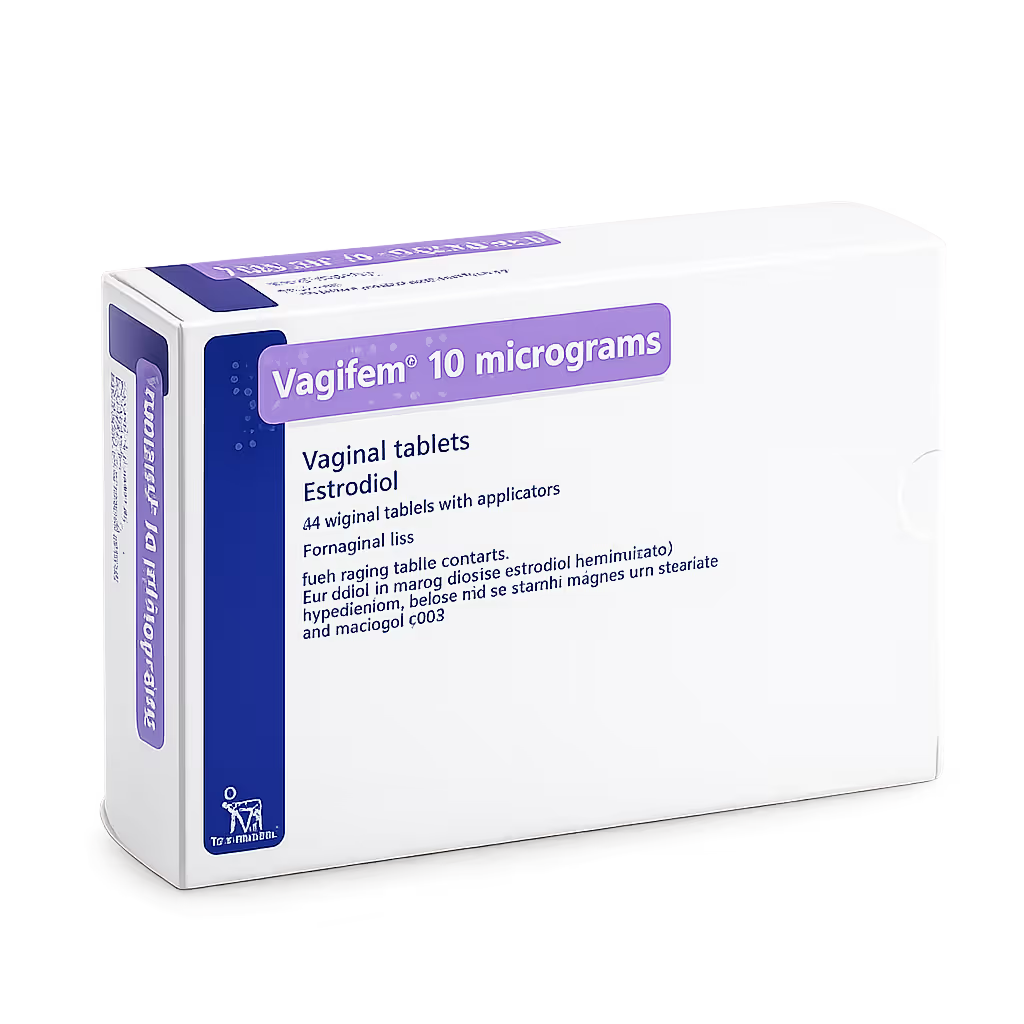
Vagifem is a prescription vaginal tablet containing a very low dose of oestradiol (10 micrograms), used to treat vaginal and urinary symptoms caused by the drop in oestrogen at menopause (known as genitourinary syndrome of menopause, or GSM)
What the clinical trial evidence shows:
The registration trial for Vagifem 10 mcg was a 12-month, double-blind, randomised, placebo-controlled trial in 309 postmenopausal women. It showed statistically significant improvements in vaginal maturation index, vaginal pH normalisation, and the most bothersome urogenital symptom at 12 weeks compared to placebo. No increased risk of endometrial hyperplasia was found over 52 weeks. [4]
The Cochrane systematic review by Lethaby et al. (2016) included 30 RCTs and 6,235 women and found low to moderate quality evidence that all vaginal oestrogen formulations, including tablets, improve symptoms of vaginal atrophy compared to placebo. Critically, it found no meaningful differences in symptom relief between formulations (cream, tablet, ring), which means there is no strong evidence that Vagifem specifically is more or less effective than other vaginal oestrogen options. [5]
A 2024 meta-analysis by Ali et al. (18 RCTs, 4,723 women) confirmed that intravaginal oestrogen significantly improves vaginal maturation and pH, with a similar adverse event profile to placebo. The finding that vaginal dryness did not reach statistical significance as a standalone outcome is likely a measurement artefact due to heterogeneity across studies, not a signal that oestrogen fails to help dryness. [6]
For women with breast cancer, a 2023 meta-analysis by Comini et al. (17 studies, 5 RCTs) found that low-dose vaginal oestrogen produced the least change in serum oestradiol and had the most evidence of any hormonal option, but concluded that safety specifically for women on aromatase inhibitors remains uncertain and further research is needed. [7]
What the guidelines say:
NICE Guideline NG23 recommends that vaginal oestrogen should be offered to all women with GSM, including those already on systemic HRT, and that treatment can continue as long as it is needed.
NICE also confirms that vaginal oestrogen is absorbed locally with minimal systemic effect, that no progestogen is needed, and that it can be considered (off-label) for women with a breast cancer history when non-hormonal options have not worked. [1]
The BMS Consensus Statement on GSM supports these recommendations and confirms that all available vaginal oestrogen preparations are clinically effective. [2]
The BSSM Position Statement on GSM similarly endorses vaginal oestrogen as the best-evidenced treatment for restoring urogenital tissue health. [3]
References
[1] National Institute for Health and Care Excellence. Menopause: identification and management (NG23, updated November 2024). Available at: https://www.nice.org.uk/guidance/ng23. No PMID (clinical guideline).
[2] British Menopause Society. Consensus Statement on Genitourinary Syndrome of Menopause (GSM). 2024/2025. Available at: https://thebms.org.uk/publications/consensus-statements/genitourinary-syndrome-of-menopause-gsm/. No PMID (clinical guideline).
[3] British Society for Sexual Medicine. Position Statement for Management of Genitourinary Syndrome of the Menopause. Available at: https://bssm.org.uk/wp-content/uploads/2024/03/BSSM-Position-statement-for-management-of-genitourinary-syndrome-of-the-menopause-GSM.pdf. No PMID (clinical guideline).
[4] Novo Nordisk Limited. Vagifem 10 micrograms vaginal tablets: Summary of Product Characteristics. Updated January 2025. Available at: https://www.medicines.org.uk/emc/product/5719/smpc. No PMID (regulatory document).
[5] Lethaby A et al. Local oestrogen for vaginal atrophy in postmenopausal women. Cochrane Database Syst Rev 2016;8:CD001500. PMID: 27577677. https://doi.org/10.1002/14651858.CD001500.pub3
[6] Ali A et al. Efficacy and Safety of Intravaginal Estrogen in the Treatment of Atrophic Vaginitis: A Systematic Review and Meta-Analysis. J Menopausal Med 2024;30(2):88-103. PMID: 39315501. https://doi.org/10.6118/jmm.23037
[7] Comini ACM et al. Safety and Serum Estradiol Levels in Hormonal Treatments for Vulvovaginal Atrophy in Breast Cancer Survivors: A Systematic Review and Meta-Analysis. Clin Breast Cancer 2023;23(8):835-846. PMID: 37806915. https://doi.org/10.1016/j.clbc.2023.08.003
One thing I'd push back on as you think about this from a marketing perspective: the evidence is genuinely strong here, which is relatively unusual. Your bigger challenge is probably not evidence credibility, it's differentiation. Vagifem, Vagirux, and various generic 10mcg estradiol pessaries all contain the same molecule at the same dose. The Cochrane review explicitly found no meaningful efficacy differences between formulations. The brand's defensible space sits in patient experience (pre-loaded applicator, long track record, prescriber familiarity), not in clinical superiority. That's worth being honest about internally, even if the marketing leans on the bioidentical framing and the heritage claims.
Continue
14:02
Oestradiol

Related Articles
You might be intrested in reading...